
Sherman Oaks Real Estate Appraiser
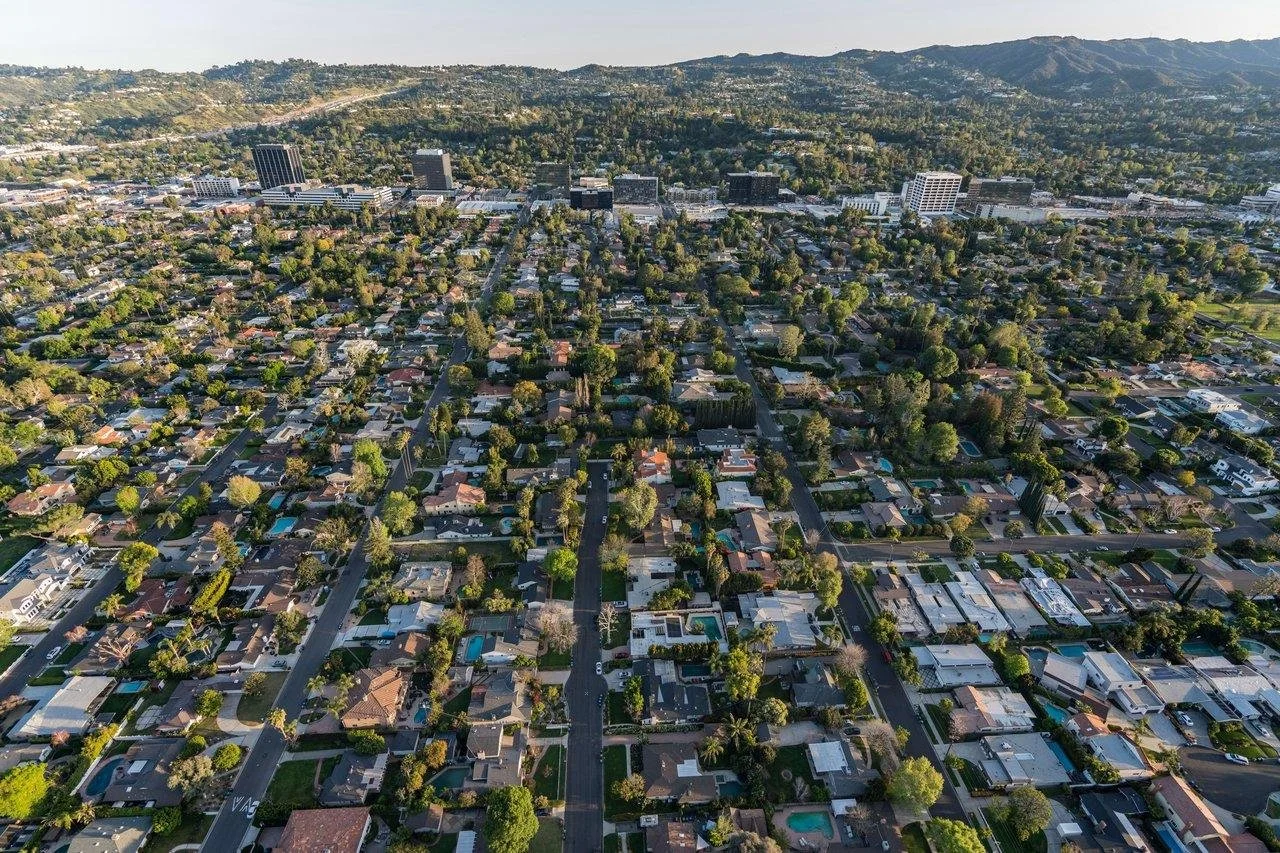
Sherman Oaks: A Case Study in Micro Markets
Before the freeways, the Galleria, and the cafés lining Ventura Boulevard, Sherman Oaks was open ranch land at the foot of the Santa Monica Mountains. General Moses Sherman, a railroad man and land developer, saw what it could become. In 1927 his company began selling off acreage, and a quiet suburb started to take shape beneath the oaks that would give it half its name.
It didn’t stay quiet for long. As the Valley grew, Sherman Oaks found itself at the center of everything: where the Valley meets the Westside, where the 101 meets the 405, and where Ventura Boulevard turns from a road into a destination. By the 1980s, the Sherman Oaks Galleria had made the neighborhood famous far beyond Los Angeles as the home turf of the Valley Girl, a pop culture moment the community has long since outgrown but never quite shaken.
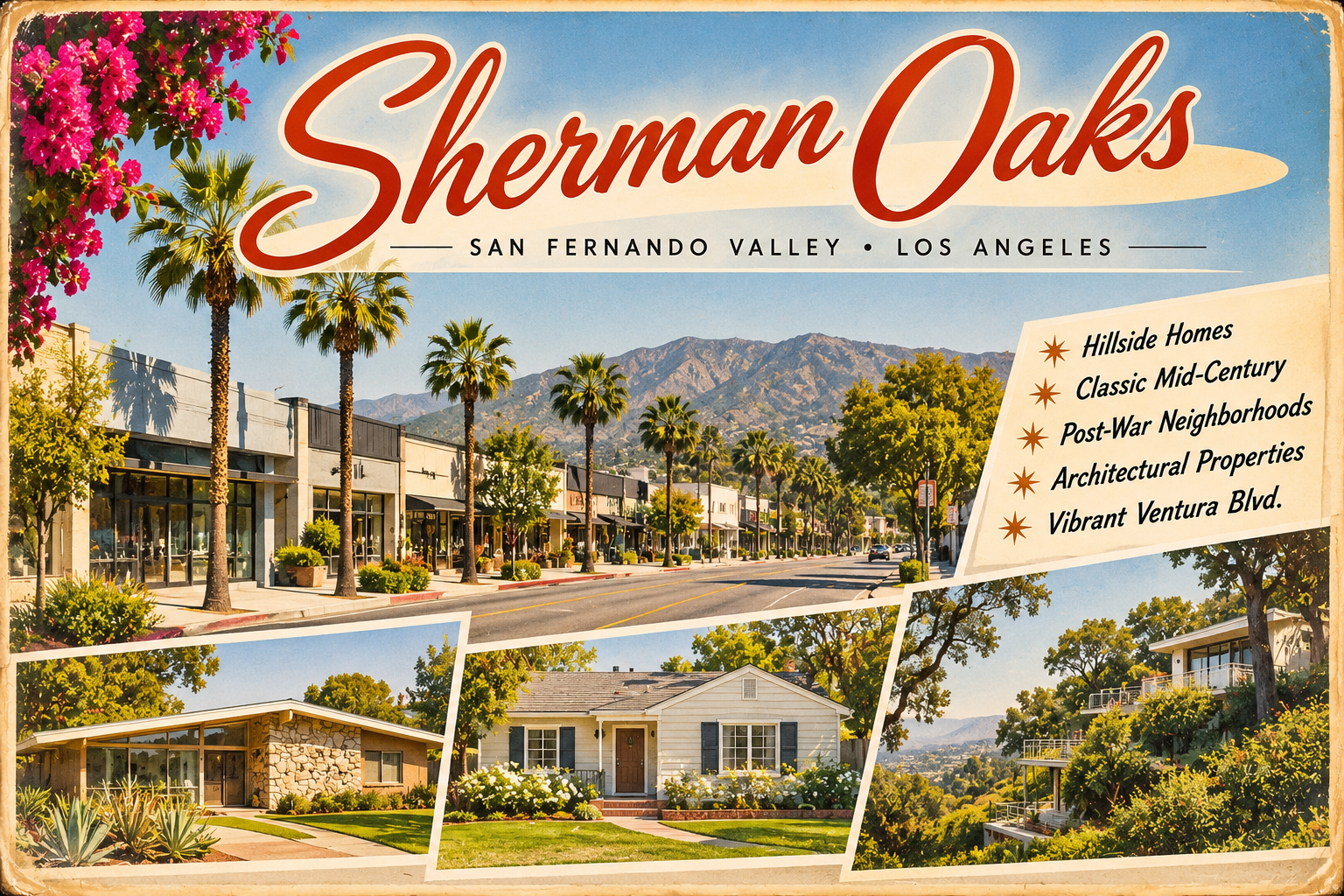
Today, Sherman Oaks is known for its energy and its range. Ventura Boulevard hums with restaurants, boutiques, and coffee shops. Hillside streets south of the Boulevard wind toward Mulholland, where homes look out over the city lights. North of the Boulevard, shaded streets of classic ranch homes and new builds give families room to spread out. Creative professionals, longtime residents, young buyers, and empty nesters all call it home, often within a few blocks of each other.
That mix is what makes Sherman Oaks one of the most interesting markets in the Valley, and one of the easiest to misjudge. Homes that share a name can belong to very different worlds. Understanding which Sherman Oaks a property belongs to is where every credible valuation begins.
A Marco-Market in Motion
Sherman Oaks isn’t standing still, and the changes are easy to see from the street.
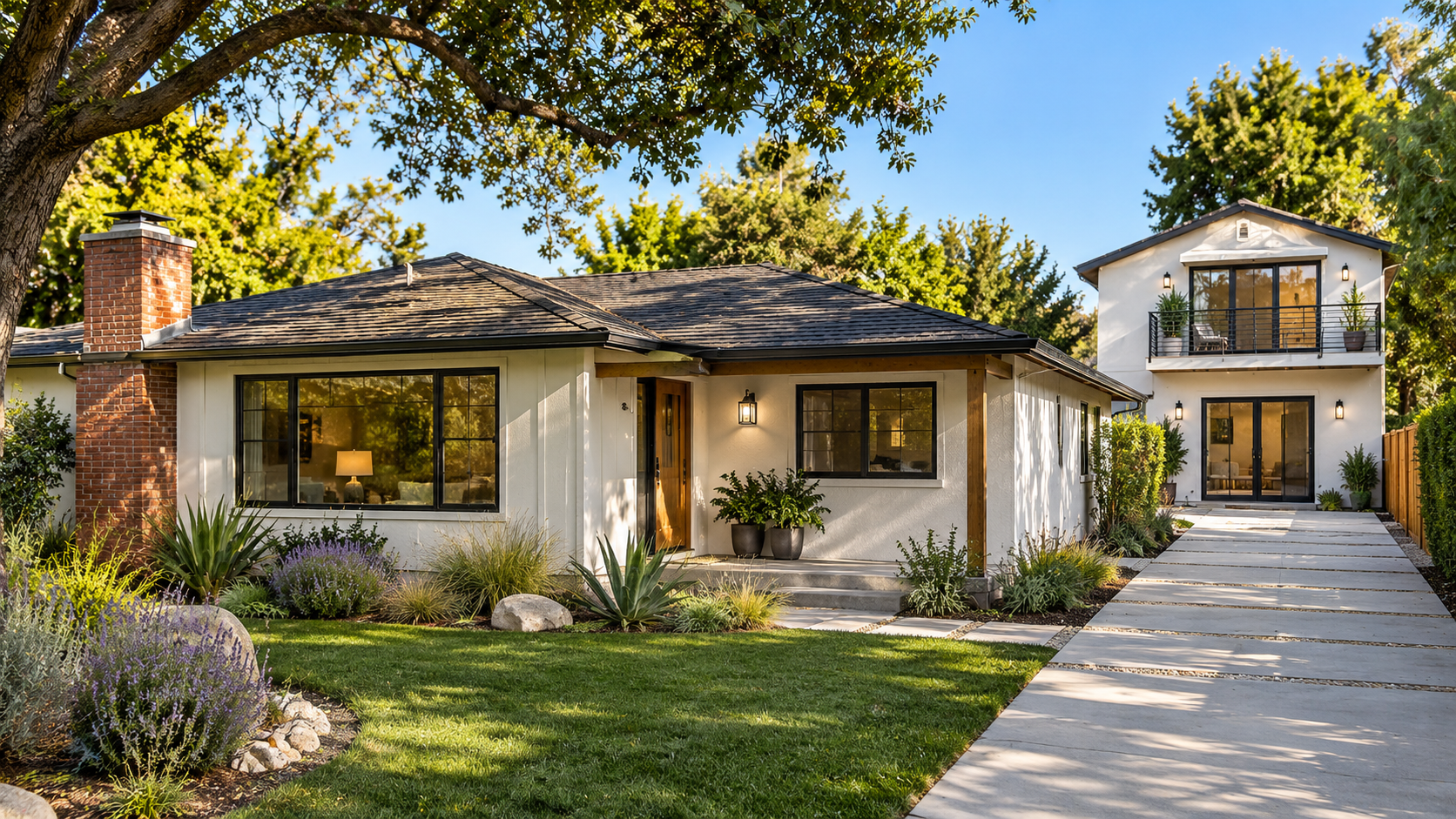
Backyard ADUs are filling in the flats. Accessory dwelling units are being built steadily on the deep postwar lots north of the Boulevard, but not evenly. According to permit data analyzed by a local ADU builder, nearly half of all ADU permits in Sherman Oaks fall within the river overlay that follows the flat, buildable streets near the Los Angeles River. The hillside tells a different story: it makes up 58% of the community’s single family land but accounts for only 11% of ADU permits. Most new ADUs are modest, with a median of 743 square feet, and about two thirds come in at 800 square feet or less.
SB 9 is reshaping single family lots. Since California’s SB 9 took effect in January 2022, owners of eligible single family lots can split them without a public hearing, as long as neither new parcel is smaller than 40% of the original lot or 1,200 square feet. In 2026, the city approved an urban lot split in North Sherman Oaks on an R1 lot in the river overlay, exactly the kind of deep, flat parcel where these projects make sense.
Zoning is being rewritten. The City of Los Angeles is updating the community plans for the entire Southeast Valley, an area of roughly 37 square miles and about 390,000 residents. Sherman Oaks falls under two of those plans, and the Van Nuys–North Sherman Oaks plan was last adopted in 1998. A draft of the Sherman Oaks–Studio City–Toluca Lake–Cahuenga Pass plan was released in January 2026, and the proposed changes could reshape what can be built along Ventura Boulevard and the commercial corridors.
Teardowns face real limits. Original ranch homes are giving way to new construction, often with an ADU built in from the start. But new homes must comply with the city’s Baseline Mansionization Ordinance, adopted in 2008, and its hillside counterpart from 2011, both strengthened in 2017 to curb out of scale houses. What a buyer can build on a lot directly affects what that lot is worth.
And renovation never stops. From kitchen and bath updates to full rebuilds, Sherman Oaks owners are constantly reinvesting in their homes.
Each of these changes raises a valuation question. Will an ADU add enough value to justify its cost? What is a lot worth if it can be split? Which renovation path pays off in this pocket of Sherman Oaks? What was an inherited ranch home worth on the date of death, before a builder saw its potential? These are the questions I answer every day.
If you have a question, we have a service and a page for that! And Blogs!
Residential Appraisal Services in Sherman Oaks
Individual Properties. Different Purposes. Thoughtful Valuation.
The diversity of Sherman Oaks' residential markets creates valuation considerations that extend well beyond differences in square footage, lot size, or architectural style.
Whether the assignment involves a traditional single-family residence north of Ventura Boulevard, a custom hillside property approaching Mulholland Drive, or a condominium within one of the community's established residential developments, a credible appraisal begins with understanding the property's competitive market.
Gatsby Appraisal provides independent residential valuation services throughout Sherman Oaks, Los Angeles, and Ventura Counties, including:
Independent valuations for property owners, investors, attorneys, and other parties seeking a well-supported opinion of fair market value. These assignments may involve ownership transfers, financial planning, private transactions, or other significant real estate decisions.
Comprehensive valuation analysis to help property owners and real estate professionals make informed decisions before introducing a property to the market. Particularly useful for unique properties, custom residences, and homes with limited directly comparable sales.
Estate & Date-of-Death Appraisals
Retrospective valuations prepared for estate administration, inheritance matters, probate proceedings, and tax-related reporting. We also provide appraisals for federal estate tax purposes, including IRS Form 706 assignments.
Divorce & Property Settlement Appraisals
Independent residential appraisals developed for marital dissolution, property division, settlement negotiations, and related legal proceedings.
Complex & Unique Property Appraisals
Specialized valuation assignments involving custom residences, hillside properties, atypical improvements, unusual site characteristics, and properties for which conventional comparable sales may be limited.
Property Tax Assessment Appeals
Residential appraisal services for property owners evaluating whether their property's assessed value accurately reflects applicable market conditions and assessment requirements.
Considering an Appraisal in Sherman Oaks?
Not every valuation question requires the same approach, and understanding the intended use of an appraisal is an important first step.
If you're uncertain which appraisal service is appropriate for your circumstances, we welcome the opportunity to discuss your property, the purpose of the valuation, and the available options.
Contact Gatsby Appraisal to discuss your Sherman Oaks property or request an appraisal fee quote.
Sherman Oaks: When Neighborhood Boundaries Become a Matter of Value
The Curious History of a Community That Redrew Its Own Map
The geographic identity of Sherman Oaks has not always been as clearly defined as its name might suggest.
In fact, some of the most interesting chapters in the community's history involve residents campaigning to change the very boundaries of Sherman Oaks—not by relocating, developing new subdivisions, or altering their properties, but by changing the neighborhood designation assigned to their existing homes.
The story provides an interesting perspective on the relationship between neighborhood identity, buyer perceptions, and residential real estate markets.
1991: The Neighborhoods That Wanted to Be Sherman Oaks
In 1991, homeowners in Chandler Estates began petitioning Los Angeles City Councilmember Zev Yaroslavsky to redraw the northern boundary of Sherman Oaks.
At the time, Magnolia Boulevard served as the northern boundary. Residents sought to extend the Sherman Oaks designation north to Burbank Boulevard, incorporating their neighborhood between Coldwater Canyon Avenue and Van Nuys Boulevard.
Their argument was not simply that they preferred a different address.
Some homeowners maintained that their properties had historically been part of Sherman Oaks and that the introduction of postal ZIP codes in the early 1960s had resulted in their neighborhood being identified with Van Nuys.
Residents presented historical property records to support their position and gathered approximately 2,000 signatures in favor of the change.
Their petition succeeded.
Within weeks, homeowners in neighboring Magnolia Woods organized a similar campaign.
This approximately 45-block neighborhood, situated between Magnolia and Burbank Boulevards, extended from Van Nuys Boulevard west toward the San Diego Freeway.
Residents gathered approximately 1,000 signatures and located at least 22 original property deeds supporting their argument that the neighborhood had previously been associated with Sherman Oaks.
In August 1991, Magnolia Woods also received the Sherman Oaks designation.
Interestingly, the question of whether these neighborhoods had always belonged to Sherman Oaks was itself disputed. Historical accounts reflected differing interpretations of the community's original boundaries.
What was no longer in dispute was the strength of the residents' desire to establish their neighborhood identity.
A Different Address. The Same Real Estate.
Perhaps the most interesting aspect of these boundary changes was the potential relationship between neighborhood designation and property value.
Contemporary reporting in the Los Angeles Times indicated that some real estate professionals believed a Sherman Oaks designation could increase residential property values by approximately 5% to 10%.
That estimate represented market expectations expressed at the time, not a documented appreciation rate or a verified adjustment applicable to individual properties.
Nevertheless, it raises an interesting valuation question.
The homes had not moved. Their lot sizes, improvements, street locations, and physical characteristics remained unchanged.
What changed was the community name associated with their addresses.
For an appraiser, this distinction is important.
Neighborhood identity can influence purchaser expectations, marketing exposure, and the way properties are perceived within a broader residential market. However, whether those perceptions translate into measurable differences in sale prices must be established through market evidence.
A neighborhood name may influence market perception, but market perception and measurable market value are not necessarily the same thing.
2009: Sherman Oaks Expands Again
The debate over neighborhood boundaries did not end in 1991.
Nearly two decades later, another group of Van Nuys homeowners petitioned the City of Los Angeles to incorporate their neighborhood into Sherman Oaks.
In July 2009, the Los Angeles City Council approved a boundary change involving approximately 1,800 homes in an area generally bounded by Sepulveda Boulevard, Burbank Boulevard, Oxnard Street, and Hazeltine Avenue, with portions of the Van Nuys Boulevard commercial corridor excluded.
Once again, residents sought recognition as part of Sherman Oaks.
The petition also illustrated how complicated neighborhood identity could become. Residents cited their relationships with Sherman Oaks schools, businesses, and civic institutions as part of their argument for the change.
These were not newly constructed homes or recently developed residential subdivisions.
They were existing properties being incorporated into a different recognized neighborhood.
Together, the 1991 and 2009 boundary changes demonstrate that the geographic identity of Sherman Oaks has evolved through community action and municipal decisions, rather than following a single, unchanging set of boundaries.
Seven Geographic Areas, One Sherman Oaks
Today, the Sherman Oaks Neighborhood Council divides the community into seven geographic areas for local representation.
The council's boundaries generally extend from Burbank Boulevard in the north to Mulholland Drive in the south, with the San Diego Freeway forming much of the western boundary and a more irregular boundary adjoining Studio City to the east.
These seven areas offer an interesting geographic perspective on Sherman Oaks.
Areas 1, 2, and 3: The Northern Valley Floor
Extending generally from Burbank Boulevard south to the Ventura Freeway, these areas encompass relatively level residential neighborhoods characterized by established street grids, traditional single-family housing, and successive periods of residential development.
They also include neighborhoods associated with the historical boundary changes that reshaped Sherman Oaks during the 1990s.
Areas 4 and 5: Between the Freeway and Ventura Boulevard
These areas occupy the central portion of Sherman Oaks between the Ventura Freeway and Ventura Boulevard.
Here, established residential neighborhoods coexist with condominium developments, multifamily properties, and the influence of nearby commercial corridors.
Differences in housing density, property type, location, and development patterns create additional considerations when identifying competitive residential markets.
Areas 6 and 7: From Ventura Boulevard to Mulholland Drive
South of Ventura Boulevard, the terrain begins its transition into the Santa Monica Mountains.
These areas include hillside residential neighborhoods, custom homes, architectural properties, and estates developed on sites with varying topography, access, views, and physical utility.
As the landscape changes, so do the characteristics that may influence purchaser preferences and property value.
The council's seven areas are administrative divisions established for community representation. They should not be interpreted as seven officially recognized real estate submarkets.
However, viewed together, they illustrate the substantial geographic and residential diversity contained within the Sherman Oaks designation.
When the Postal Map and the Neighborhood Map Disagree
One final distinction makes Sherman Oaks particularly interesting.
The Sherman Oaks Neighborhood Council acknowledges that some properties carrying a Sherman Oaks postal designation fall outside its official jurisdiction.
Certain properties west of the 405 Freeway are represented by the Encino Neighborhood Council, while some properties north of Burbank Boulevard fall within the Van Nuys Neighborhood Council.
This creates an unusual situation in which a property's mailing address, neighborhood council representation, and competitive residential market may reflect different geographic boundaries.
The distinction is especially relevant when reviewing automated property information, ZIP-code-based statistics, and geographic market reports.
A property identified as Sherman Oaks in one database may be associated with a different neighborhood in another.
Neither designation, by itself, establishes which properties are appropriate substitutes in a valuation analysis.
What This History Teaches Us About Residential Valuation
The history of Sherman Oaks provides more than an interesting account of neighborhood boundary changes.
It demonstrates why geographic classifications should be examined rather than accepted as automatic definitions of residential markets.
A ZIP code is a postal designation. A neighborhood council boundary establishes a jurisdiction for community representation. A recognized neighborhood name identifies a community.
A competitive real estate market, however, is defined by the alternatives considered by purchasers and the market behavior demonstrated by actual transactions.
These distinctions are fundamental to the appraisal process.
At Gatsby Appraisal, our analysis of Sherman Oaks properties considers the relationship between location, residential characteristics, competitive supply, and market participant behavior.
The objective is not simply to identify properties carrying the same neighborhood designation, but to determine which properties provide meaningful evidence of how buyers value the subject property's particular characteristics.
In a community with a history as geographically and residentially varied as Sherman Oaks, understanding those distinctions is essential to developing a credible opinion of value.