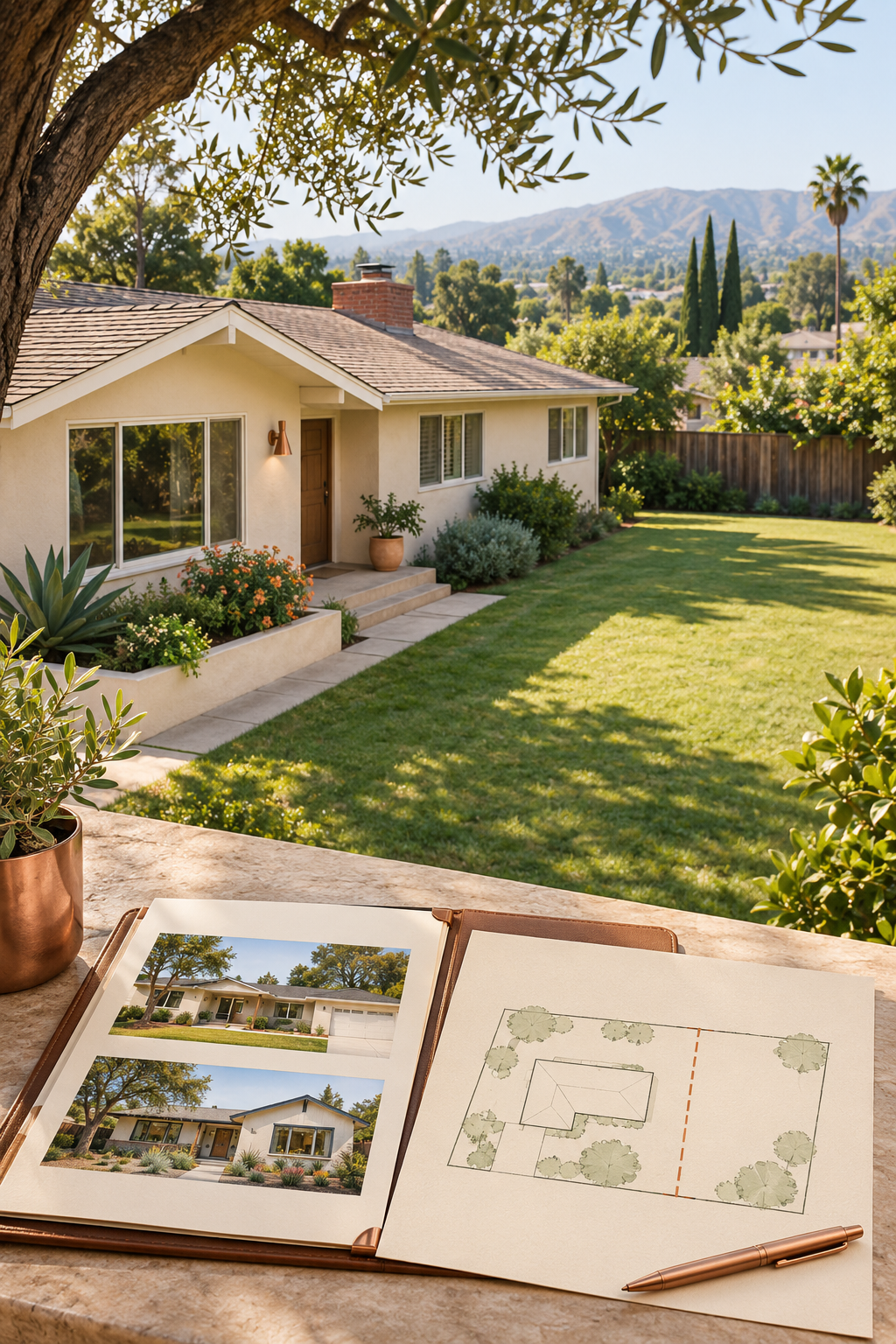
SB-9 Lot Split and Development Feasibility Analysis
Understanding California Senate Bill 9 (SB 9): The California HOME Act
California Senate Bill 9 (SB 9), formally known as the California Housing Opportunity and More Efficiency (HOME) Act, was signed into law in September 2021 and became effective January 1, 2022. The legislation introduced significant changes to residential development opportunities in California by creating a pathway for qualifying property owners to construct additional housing, pursue an urban lot split, or potentially combine both development options.
Historically, single-family residential zoning restricted the number of primary dwelling units permitted on an individual parcel. SB 9 modified this framework by allowing certain properties within qualifying single-family residential zones to accommodate additional housing without requiring traditional discretionary approvals associated with some residential development and subdivision proposals.
Under California Government Code Sections 65852.21 and 66411.7, qualifying SB 9 projects are generally subject to ministerial approval, meaning applications are evaluated against applicable objective standards rather than through discretionary public hearings or subjective planning determinations.
This streamlined approval process can create meaningful opportunities for California homeowners and residential property investors. However, SB 9 does not eliminate zoning requirements, development standards, physical site limitations, or the need for appropriate permits and approvals. Eligibility depends on the characteristics of the property, applicable statutory provisions, and local implementation requirements.
What Development Opportunities Does SB 9 Allow?
California SB 9 generally provides two distinct development pathways:
1. Two-Unit Residential Development: The construction or configuration of up to two primary residential dwelling units on a qualifying single-family residential parcel, subject to applicable requirements.
2. Urban Lot Splits: The subdivision of a qualifying residential parcel into two separate legal parcels, potentially creating additional opportunities for residential development and independent ownership.
Under qualifying circumstances, these provisions may be combined, potentially accommodating up to four residential units within the area previously occupied by a single-family residential parcel. The actual number and configuration of permissible units depend on statutory limitations, local objective standards, and property-specific conditions.
But an important distinction remains: The legal ability to develop a property does not necessarily mean the proposed development is physically practical, financially feasible, or supported by market demand.
Understanding that distinction is fundamental to evaluating SB 9 development potential.
SB 9 Lot Split Feasibility: Looking Beyond Lot Size
Evaluating a potential California SB 9 urban lot split requires more than calculating parcel dimensions or confirming minimum lot area requirements. Although lot size is an important preliminary consideration, the practical feasibility of subdividing a residential property depends on its physical characteristics, applicable development standards, and the configuration of existing improvements.
A parcel may satisfy preliminary size requirements yet present significant challenges when evaluating how two functional residential lots could be created.

Important considerations in an SB 9 lot split feasibility analysis include:
Parcel Size and Configuration: Existing lot dimensions, geometry, and the potential configuration of two resulting parcels.
Street Frontage and Access: Available street frontage, legal access, driveway placement, and circulation requirements.
Setbacks and Building Placement: Applicable setbacks, existing building locations, and the remaining area available for development.
Zoning and Regulatory Restrictions: Applicable zoning provisions, overlays, statutory eligibility requirements, and local objective development standards.
Utilities and Infrastructure: Existing utility connections, potential service requirements, and infrastructure placement.
Physical Site Characteristics: Topography, easements, existing improvements, and other conditions that may limit practical development.
Meeting the minimum lot size requirements does not automatically mean a property can be successfully subdivided or developed.
The proposed configuration must also account for applicable legal requirements, physical constraints, and the practical utility of the resulting parcels.
Understanding these considerations early in the process can help property owners distinguish between theoretical subdivision potential and a development concept that warrants further investigation.
SB 9 Preliminary Feasibility Analysis: Evaluating Lot Split Potential and Property Value
An SB 9 urban lot split may create opportunities for residential property owners to subdivide qualifying land into two separate parcels. However, determining whether a property qualifies for subdivision is only the beginning. The more consequential question is whether the proposed lot split is physically practical, economically feasible, and supported by local real estate market conditions.
A preliminary SB 9 lot split feasibility analysis examines the relationship between a property's physical characteristics, applicable development requirements, and potential market value before an owner commits substantial resources to surveying, architectural design, engineering, or the municipal approval process.
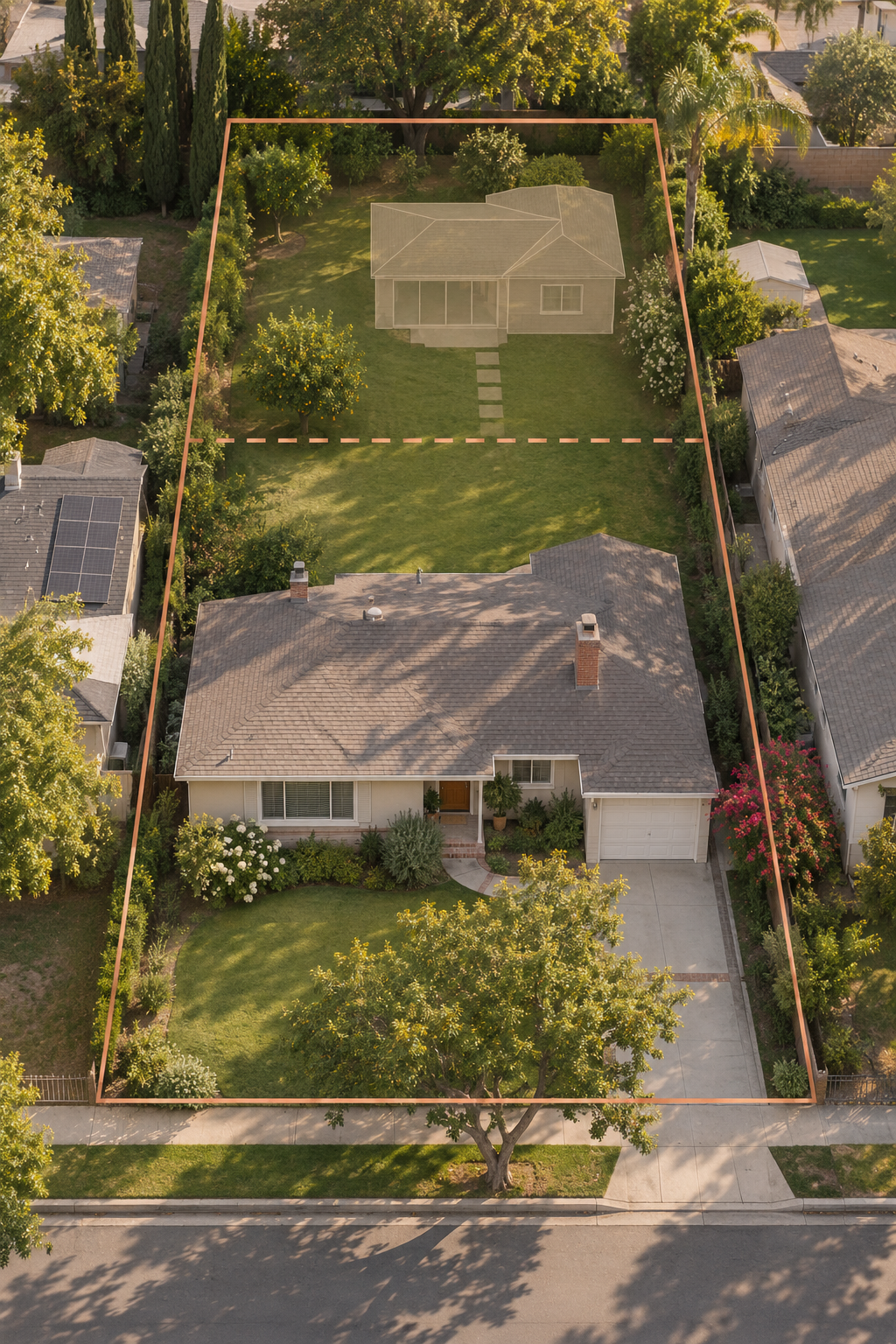
Evaluating the Practical Feasibility of an SB 9 Lot Split
A property may satisfy preliminary statutory eligibility requirements yet present challenges that affect the utility, configuration, or development potential of the resulting parcels.
Preliminary feasibility considerations may include street frontage, legal access, setbacks, existing building placement, parcel geometry, zoning overlays, utility infrastructure, and other physical or regulatory constraints.
These characteristics can influence not only whether a proposed subdivision warrants further investigation, but also how the resulting parcels might function within the local residential real estate market.
How Does an SB 9 Lot Split Affect Property Value?
The ability to subdivide a property does not automatically mean that subdivision will increase its market value.
An SB 9 lot split may create two separately marketable parcels, but the combined value of those parcels is not necessarily greater than the value of the original property after accounting for subdivision expenses, required improvements, development limitations, and market demand.
A meaningful SB 9 property value analysis considers the potential marketability and utility of the proposed parcels, including how buyers may respond to their size, configuration, access, development potential, and surrounding neighborhood characteristics.
Depending on the proposed development strategy, the analysis may also consider whether retaining the property in its existing configuration represents a more economically advantageous alternative.
Market-Supported Analysis Before You Commit
Gatsby Appraisal provides preliminary SB 9 feasibility and land value analysis for property owners and investors in Los Angeles and Ventura Counties, examining potential development opportunities through the perspective of real estate market behavior.
Our analysis is intended to help identify potential development limitations, evaluate the market implications of proposed lot configurations, and provide insight into whether further investigation of an urban lot split may be warranted.
By examining both the physical characteristics of the property and the potential economic consequences of subdivision, property owners can approach development decisions with a clearer understanding of the opportunities, limitations, and financial considerations involved.
Because a property can qualify for an SB 9 lot split without that lot split necessarily representing its most economically advantageous use.
Understanding SB 9 Development Risk
Even when a property appears eligible for an SB 9 urban lot split, unresolved regulatory requirements, infrastructure needs, construction costs, and site-specific constraints can introduce substantial financial uncertainty. Preliminary feasibility and market analysis can help identify potential obstacles before significant resources are committed to surveying, engineering, architectural design, or municipal applications.
The objective is not to eliminate development risk, but to better understand it before making consequential investment decisions.
Who Benefits From an SB 9 Lot Split Feasibility Analysis?
An SB 9 lot split feasibility analysis can provide valuable preliminary insight for Los Angeles and Ventura County property owners, real estate investors, and development professionals evaluating residential subdivision opportunities.
Whether you're considering subdividing a property you already own, purchasing land for future development, or comparing potential investment strategies, understanding the relationship between development possibilities and market value can inform your next steps.
Gatsby Appraisal approaches these questions from a real estate valuation and market analysis perspective, helping clients assess whether a proposed subdivision warrants further investigation before committing substantial resources to design, engineering, or municipal approvals.
Our role is to help you understand the property's potential—not to promise a particular development outcome.
Beyond SB 9: California's Expanding Lot Split and Housing Development Laws
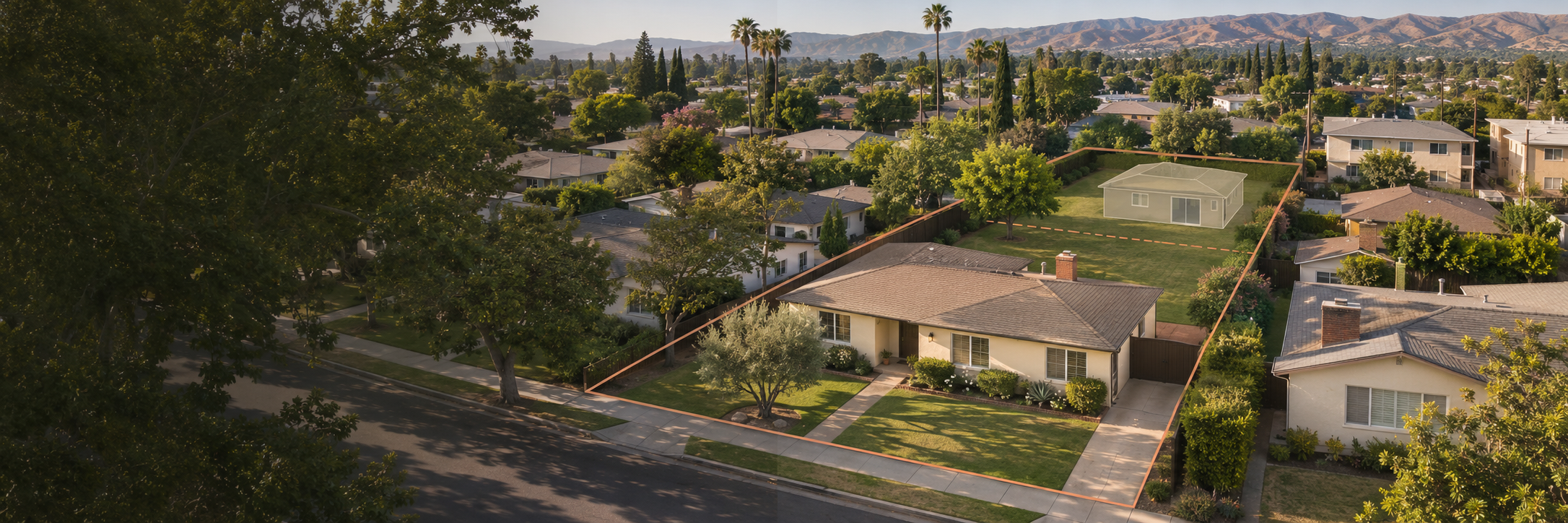
California Senate Bill 9 was an important development in the state's evolving residential housing legislation, but it is only one part of a broader regulatory framework.
Since SB 9 became effective in 2022, additional legislation has addressed residential subdivision, infill housing development, and local approval procedures.
SB 450 introduced changes intended to streamline SB 9 application procedures and approval timelines. SB 10 created a pathway for local governments to adopt certain higher-density residential zoning provisions. SB 684 established streamlined subdivision procedures for qualifying small-scale housing developments, while SB 1123 expanded aspects of that framework to qualifying vacant single-family residential properties.
These laws address different development circumstances, and their applicability depends on property characteristics, zoning, statutory eligibility, and local implementation.
For property owners and investors, understanding the distinctions between these legislative pathways can be important when evaluating potential development strategies.
The question isn't simply what California law may permit. It's which development opportunities are applicable to a particular property—and whether pursuing them makes economic sense.
Explore our dedicated guide to California's evolving lot split and residential development legislation.
Experience Matters When Evaluating Development Potential
Gatsby Appraisal brings more than two decades of residential real estate valuation experience to preliminary SB 9 feasibility and land value analysis. Licensed since 2003, Certified Residential since 2008, and with more than 5,000 appraisal assignments completed, our work draws on extensive experience evaluating property characteristics, land utility, and market behavior throughout Los Angeles and Ventura Counties.
Our analysis approaches development opportunities from a valuation perspective, examining how proposed changes to a property may influence its utility, marketability, and potential market value.