Probate Appraisal Services
The probate referee’s appraisal:
In a formal California probate, real property and most non-cash assets are generally appraised by a probate referee appointed through the State Controller’s program. The referee’s values appear on the Inventory and Appraisal filed with the court.
An independent probate appraisal:
A licensed appraiser may be engaged to support, review, or in certain circumstances take the place of the referee’s appraisal, and to answer valuation questions that arise throughout the administration of the estate.
Gatsby Appraisal is an independent real estate appraisal service and serves a different, often complementary purpose.
A California-licensed or certified real estate appraiser may be retained by an estate representative, attorney, or other interested party to develop a detailed, market-supported valuation addressing specific questions arising during estate administration.
These assignments may involve retrospective values, current market values, unusual property characteristics, proposed sales, or disagreements concerning a property's value.
Independent appraisals do not ordinarily replace the court-required probate referee appraisal unless an applicable legal exception or court authorization permits it.
Gatsby Appraisal provides independent residential real estate appraisals supported by thorough research, market analysis, and clearly explained conclusions.
We work alongside the probate process, not around it.
What Is a Probate Appraisal?
A probate appraisal is an opinion of a property’s fair market value as of the decedent’s date of death, or another date relevant to the estate. It is used to support estate administration, court-confirmed sales, distribution among heirs, tax reporting, and the resolution of disputes.
In California, the term can mean two different things, and the difference matters.
When Do You Need an Independent Probate Appraisal?
Not every estate requires formal probate, and not every date-of-death appraisal is a probate appraisal. Properties held in a living trust can generally be administered outside the formal probate process, although trustees may still require independent valuations for tax reporting, asset distribution, and other estate-related decisions.
Probate proceedings introduce additional considerations, including court oversight, probate referee valuations, property sales, and potential disputes among beneficiaries.
Below, we explore some of the circumstances in which an independent residential appraisal can provide valuable support during probate administration.
For a broader discussion of valuations involving estates, trusts, and inherited real estate, we also invite you to explore our section below and our Estate & Date-of-Death Appraisal Services, linked in that section.

When an Independent Probate Appraisal Can Make a Difference
Supporting the Probate Referee
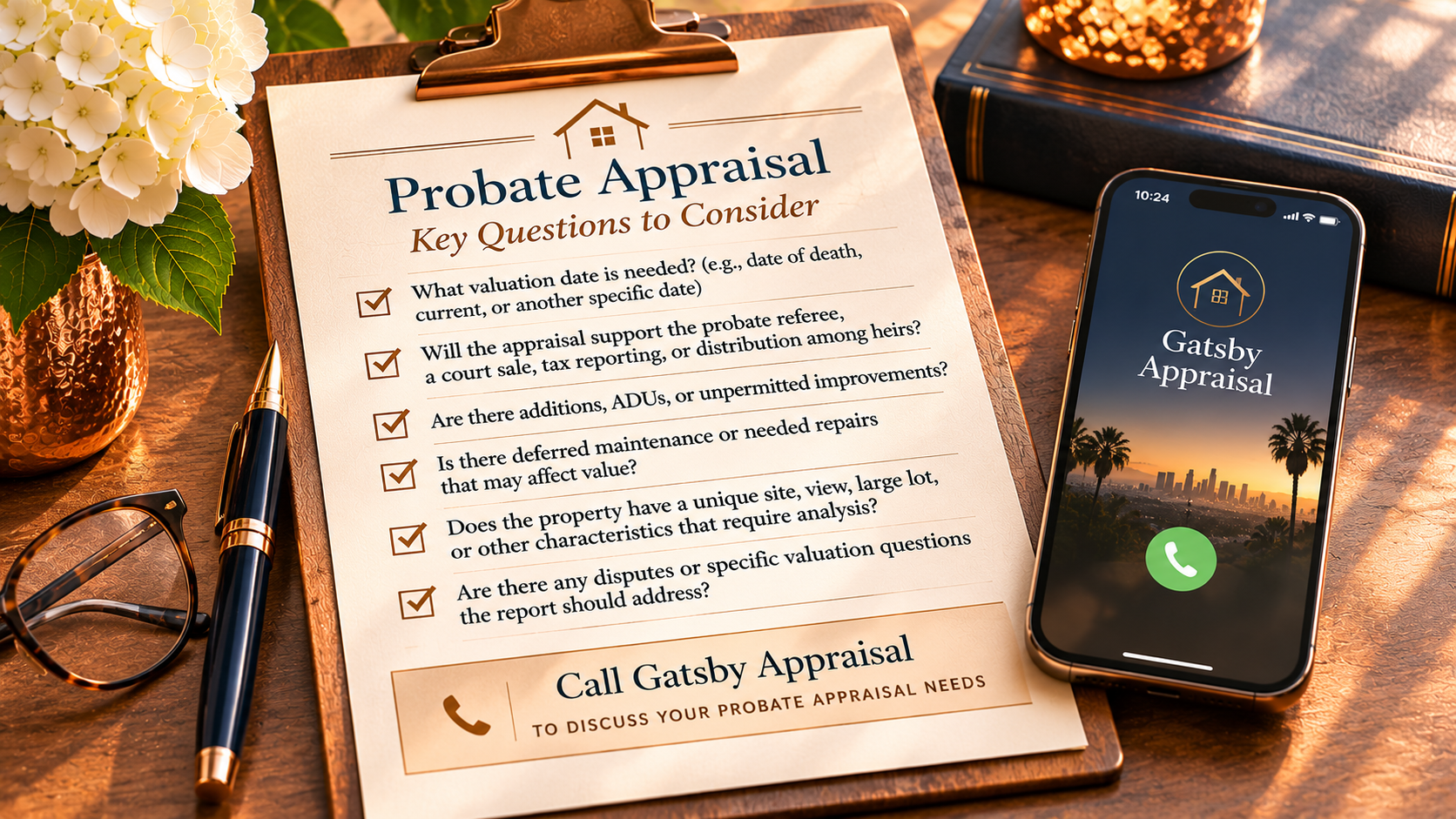
The personal representative is required to provide the referee with supporting information about estate property. For homes with significant deferred maintenance, unpermitted additions, unusual sites, or other characteristics that are not apparent from public records, a detailed independent appraisal can help ensure the property is valued on accurate information.
When a Referee’s Value Is in Question
Personal representatives and beneficiaries may object to a referee’s appraisal, but the objecting party must support that objection. An independent, well-documented appraisal provides the market evidence needed to evaluate whether a challenge is warranted.
When the Court Waives the Referee
California courts may waive appraisal by a probate referee for good cause. When a waiver is granted, an independent appraisal often becomes the basis for the inventory value.
Selling a Home in Probate
When estate real property is sold through a court-confirmed sale, California generally requires a current appraisal and a minimum offer tied to the appraised value. We provide appraisals and reappraisals that help personal representatives and their attorneys plan the sale with realistic expectations.
Small Estate and Primary Residence Thresholds
California offers simplified procedures for qualifying estates, including a petition process for a primary residence valued at $750,000 or less for deaths on or after April 1, 2025. When a home’s value is near that threshold, an early independent appraisal can help counsel determine the most appropriate path.
Dividing the Estate Among Heirs
When one heir wishes to keep the home and buy out the others, or when property is distributed in kind, everyone benefits from an independent value they can rely on. A credible appraisal can reduce disagreement before it becomes a dispute.
Federal Estate Tax and Stepped-Up Basis
Estates filing IRS Form 706 require a supportable date of death fair market value. Heirs who later sell inherited property also benefit from documentation of the property’s value at death for capital gains purposes. Learn more about our Estate & IRS Form 706 Appraisals.
Probate Disputes and Litigation
When heirs disagree, partition is sought, or estate decisions are challenged, valuation evidence must withstand scrutiny. We provide reports prepared for examination, along with Litigation Support and Expert Witness services when needed.
Multiple Properties? Multiple Counties? Let's Talk.
An estate doesn't always fit neatly within one county—or one property type.
When an estate includes residential properties across Southern California, or a combination of residential and commercial real estate, coordinating multiple appraisals can become another responsibility in an already complicated process.
Gatsby Appraisal maintains professional relationships with fellow appraisers throughout Southern California, including a California Certified General Appraiser qualified to undertake commercial valuation assignments.
Whether your estate includes a family residence, rental properties, vacant residential land, or commercial real estate, we may be able to help you connect with the appropriate valuation professionals.
Send us your property list. We may be the only call you need to make.
Date of Death Appraisals Require a Look Back
Most probate and trust appraisals are retrospective. The effective date is the date of death, which may be months or even years before the appraisal is requested.
A credible retrospective appraisal relies only on the sales, listings, and market conditions that existed as of that date. It accounts for the property’s condition at the time of death, not its condition today, and it does not interpret the past through the benefit of hindsight.
Retrospective valuation is a regular part of our practice. Learn more about our Retrospective Valuation and Date of Death Appraisal services.
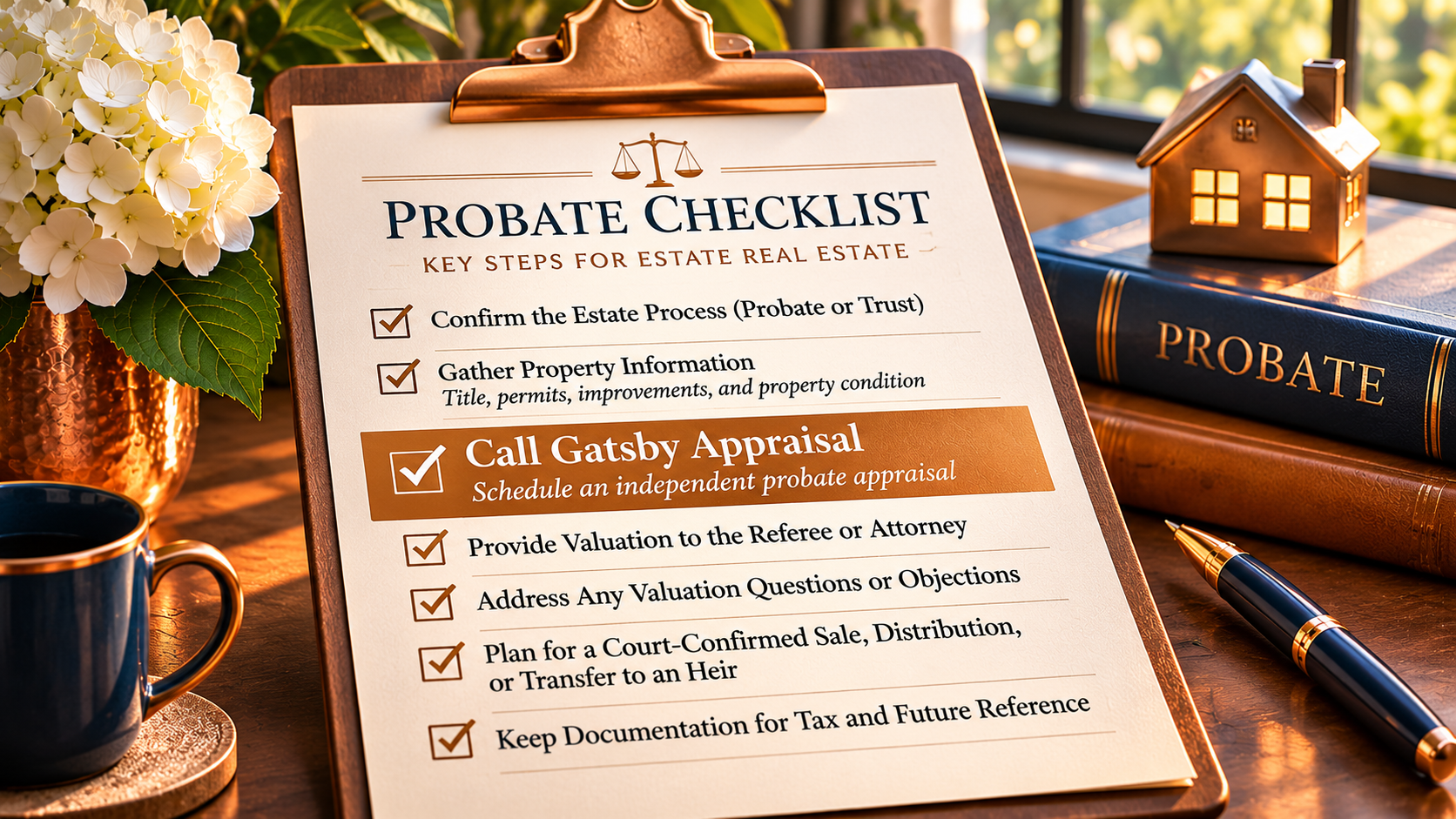
If you're serving as a successor trustee and are uncertain which type of appraisal your responsibilities require, Gatsby Appraisal welcomes the opportunity to discuss your valuation needs and help you understand the available options.
Trust Appraisals: When the Property Is Not in Probate
Many families search for a probate appraisal when the property is actually held in a living trust. Trust administration generally does not involve a probate referee, which means the trustee is responsible for obtaining an independent valuation.
A date of death trust appraisal may be needed to:
Establish values for beneficiaries and the trust accounting
Document stepped-up basis for future capital gains reporting
Support a buyout between beneficiaries
Allocate property between separate trust shares
Support estate tax reporting when applicable
Estate Properties That Deserve a Closer Look
Not every property entering probate is ready for the market, and not every estate valuation can be supported by a quick estimate.
Homes held by the same family for decades may have original kitchens and bathrooms, substantial deferred maintenance, unpermitted improvements, or unusual characteristics that require more extensive market analysis. These considerations become particularly important when developing a retrospective appraisal reflecting the property's condition and market position as of the date of death.
Gatsby Appraisal provides independent probate and estate real estate appraisals throughout Los Angeles and Ventura Counties, including properties with characteristics that require specialized research and valuation expertise.
Unusual property characteristics do not automatically translate into higher or lower values. Their contribution must be understood through relevant market evidence.
Our analysis considers property condition, legally permissible uses, marketability, and the behavior of buyers competing in the property's market as of the applicable valuation date.
Through detailed research and clearly written narrative addenda, we explain the comparable sales, market relationships, and reasoning supporting our conclusions.
Because a credible probate appraisal should do more than report a value—it should help estate representatives, attorneys, and beneficiaries understand the market evidence behind it.

Our experience includes:
Long-held family residences with original improvements, deferred maintenance, or significant rehabilitation needs.
Properties with additions, ADUs, conversions, or unpermitted improvements that require careful consideration of legal status, utility, and market recognition.
Hillside properties, view homes, oversized lots, and acreage, where topography, accessibility, land utility, and development restrictions may influence value.
Architecturally distinctive, custom-built, and historic residences with unique construction characteristics, preservation considerations, or limited comparable sales.
Small residential income properties, including duplexes, triplexes, and fourplexes, where rental income, operating characteristics, and investor expectations may influence market value.

Frequently Asked Questions
What is a probate appraisal?
A probate appraisal is an opinion of a property’s fair market value as of the date of death or another date relevant to the estate. It supports estate administration, sales, distribution, tax reporting, and dispute resolution.
Who appraises real estate in a California probate?
In a formal California probate, real property is generally appraised by a court-appointed probate referee. An independent appraisal may be used to support, review, or, where the court permits, replace that appraisal.
Do I need a probate appraisal if the house is in a trust?
Trust administration generally does not involve a probate referee. Trustees typically obtain an independent date of death appraisal for the beneficiaries, the trust accounting, and future tax reporting.
Can you appraise a property as of a date in the past?
Yes. Retrospective appraisals use the sales and market conditions that existed as of the date of death or other effective date, and consider the property’s condition at that time.
Do you need to inspect the property?
An interior and exterior inspection is preferred whenever possible. When access is limited or the property has changed since the date of death, we discuss options and disclose any limitations clearly in the report.
Can an appraisal help if heirs disagree about value?
An independent, well-supported appraisal often gives everyone a common reference point. When disagreements continue, our reports are prepared to withstand review in mediation or litigation.
How long does a probate appraisal take?
Timing depends on the property, the effective date, and access. We will give you a realistic timeline when you contact us.
Is the appraisal the same as a probate referee’s value?
Not necessarily. The referee and an independent appraiser may reach different conclusions. When the difference matters, a detailed, well-supported report helps attorneys and the court understand why.
Let’s Talk About the Estate
You don’t need to know exactly what kind of appraisal you need before you call. Tell us about the property and the situation, and we’ll help you understand your options and the valuation questions to discuss with your attorney.