
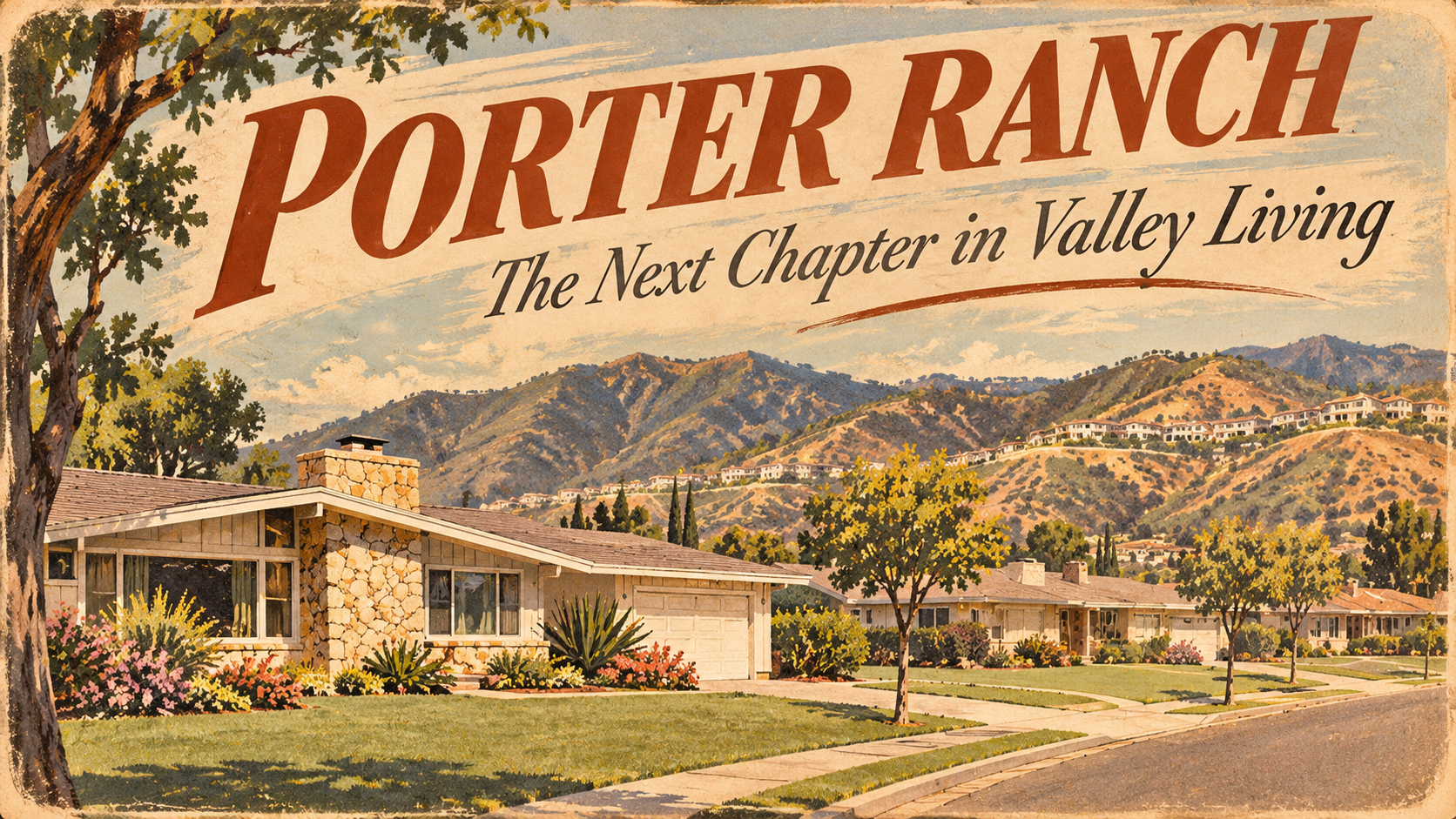
Independent Residential Appraisals | Porter Ranch, California 91326
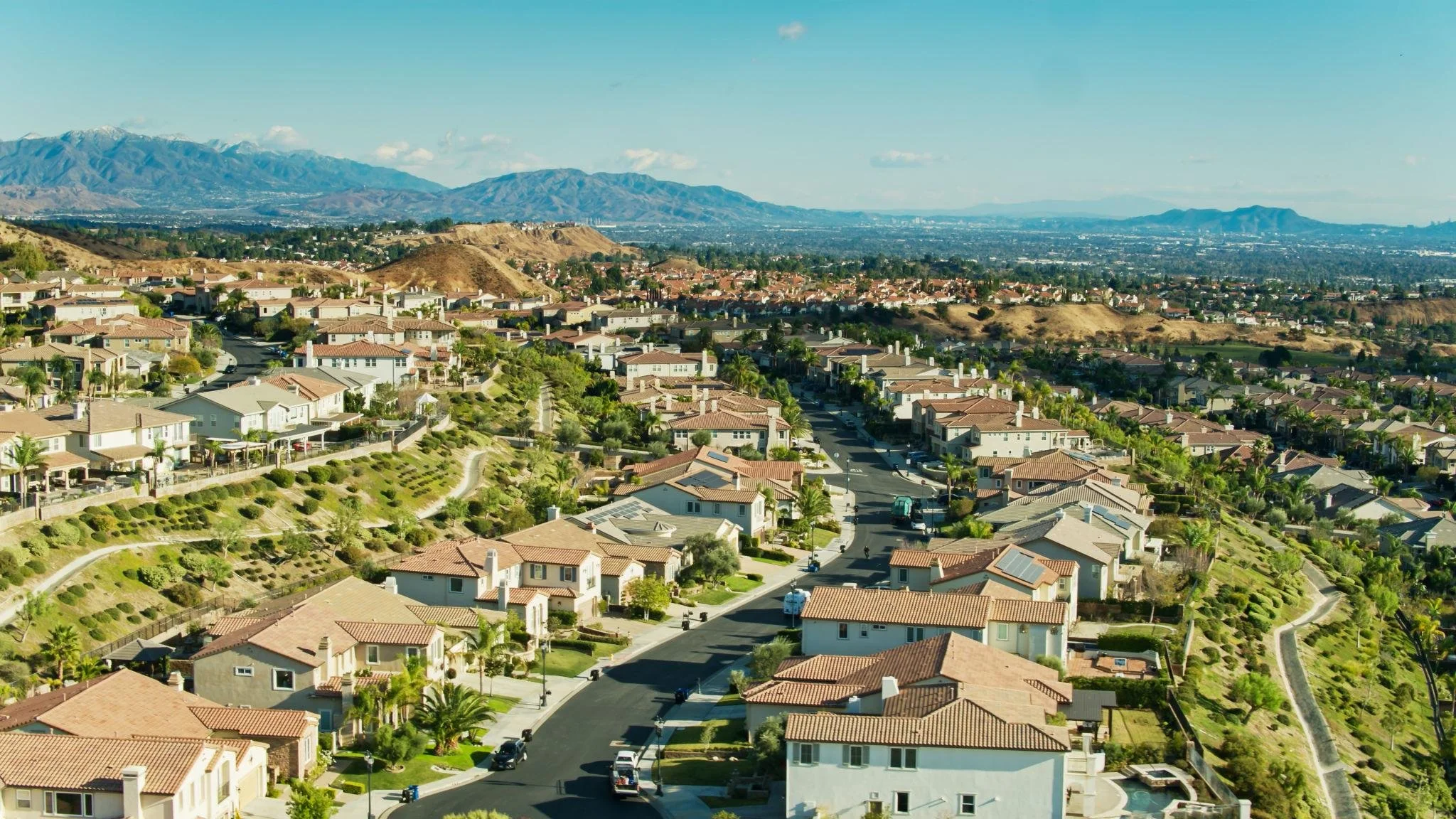
Larger residences, contemporary floor plans, gated neighborhoods, planned unit developments, shared recreational amenities, and coordinated residential communities increasingly became part of the suburban experience.
Yet Porter Ranch is not exclusively a community of newer construction. Its earliest residential neighborhoods share important historical and architectural characteristics with neighboring Northridge, reflecting a period when the geographic identities of the two communities were not always clearly distinguished.
The result is a distinctive housing market encompassing several generations of residential construction, from traditional suburban neighborhoods to contemporary master-planned communities.
At Gatsby Appraisal, we understand that these differences extend beyond architecture and construction dates. They reflect changes in how properties are designed, marketed, purchased, and valued.
With more than 20 years of residential appraisal experience and over 5,000 completed assignments, Gatsby Appraisal provides independent residential valuations for homeowners, attorneys, real estate professionals, and private clients throughout Porter Ranch and the surrounding San Fernando Valley.
The Evolution of Southern California Suburban Living Continues in Porter Ranch.
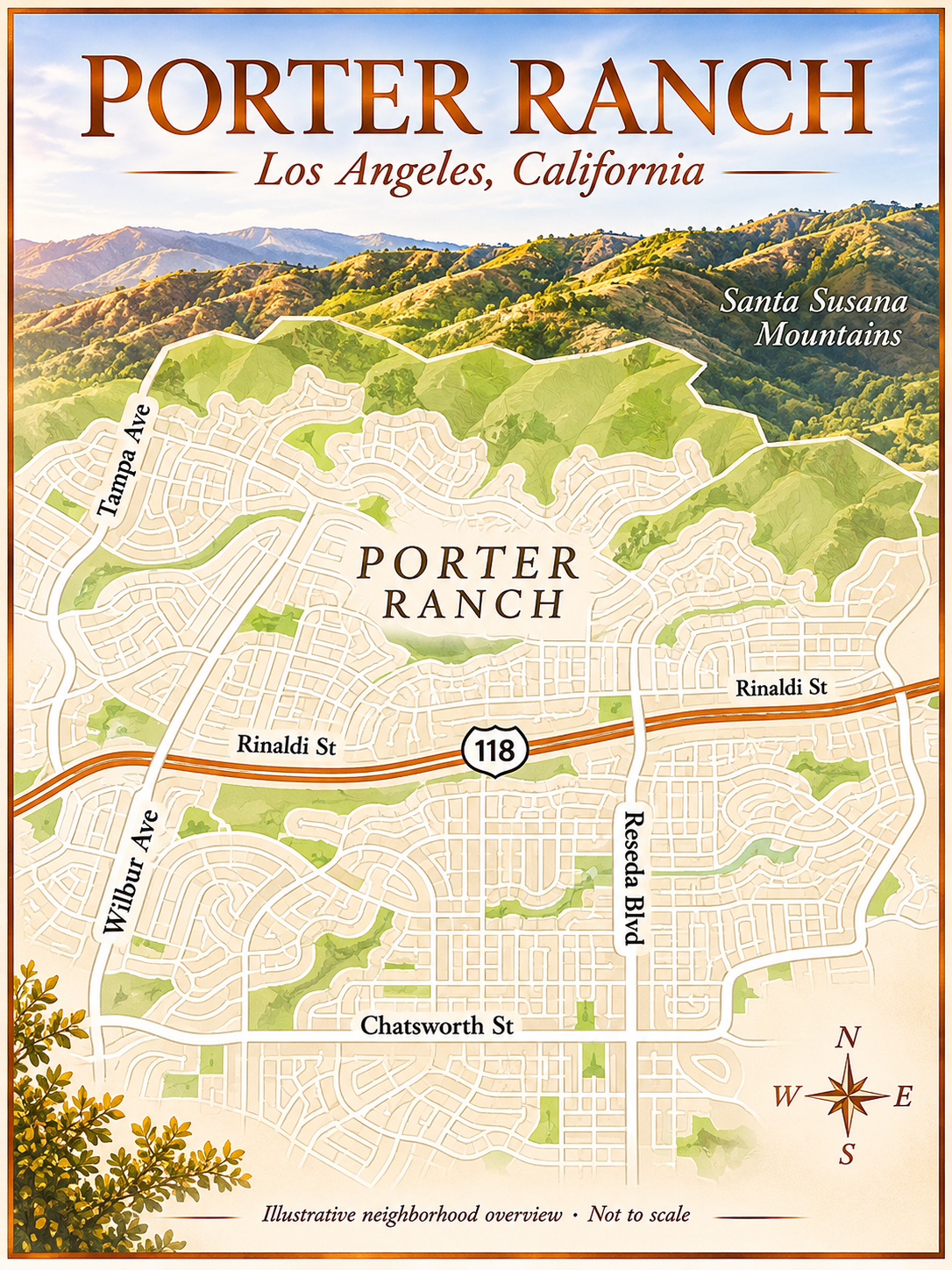
Porter Ranch represents one of the more recent chapters in the residential development of the San Fernando Valley. Situated along the foothills of the Santa Susana Mountains, the community reflects decades of changing architectural preferences, residential planning, and expectations surrounding family-oriented suburban living.
While neighboring Northridge helped establish the spacious residential lifestyle that came to characterize much of the northwestern San Fernando Valley, Porter Ranch carried many of those principles into a new generation of development.
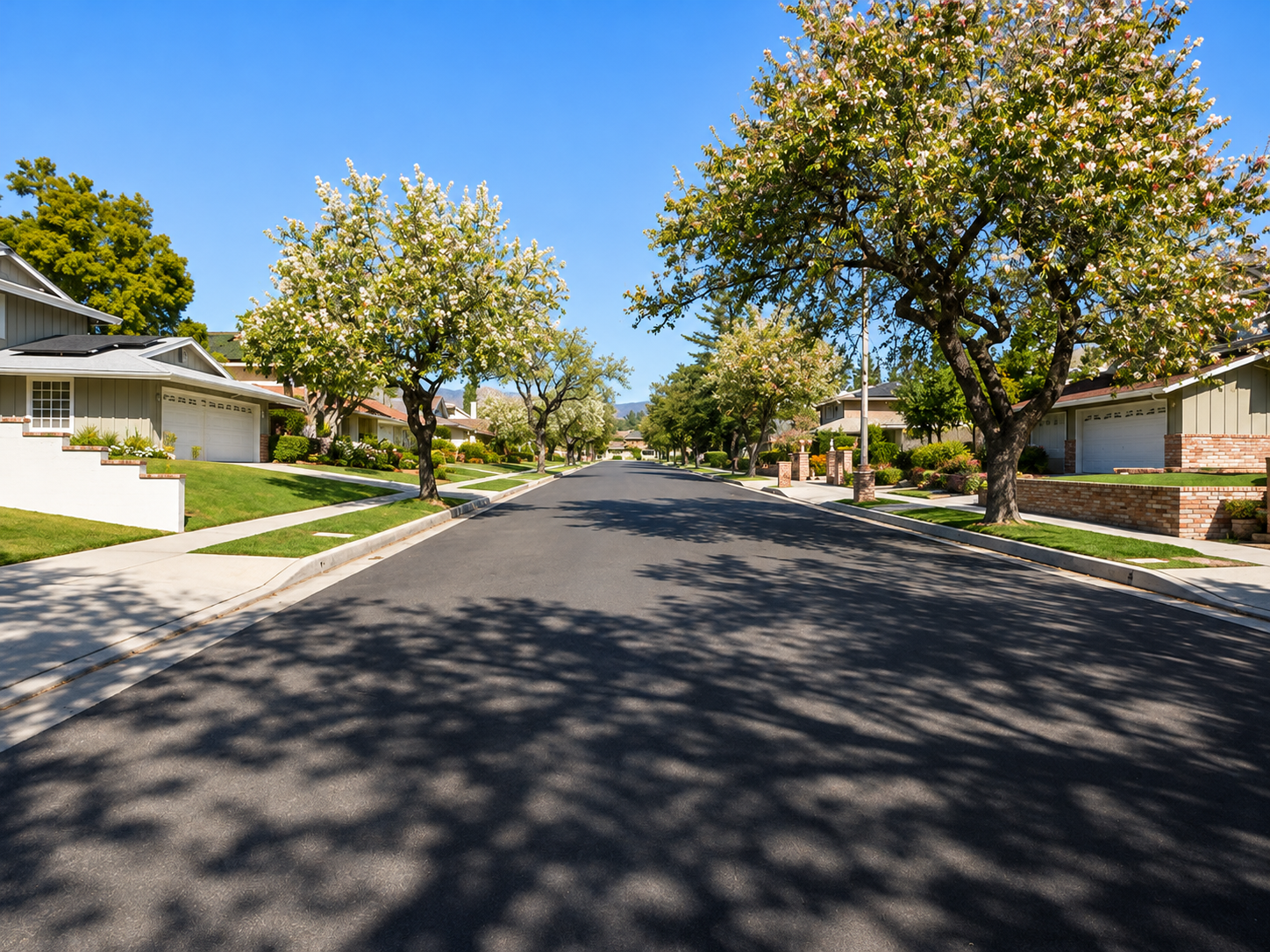
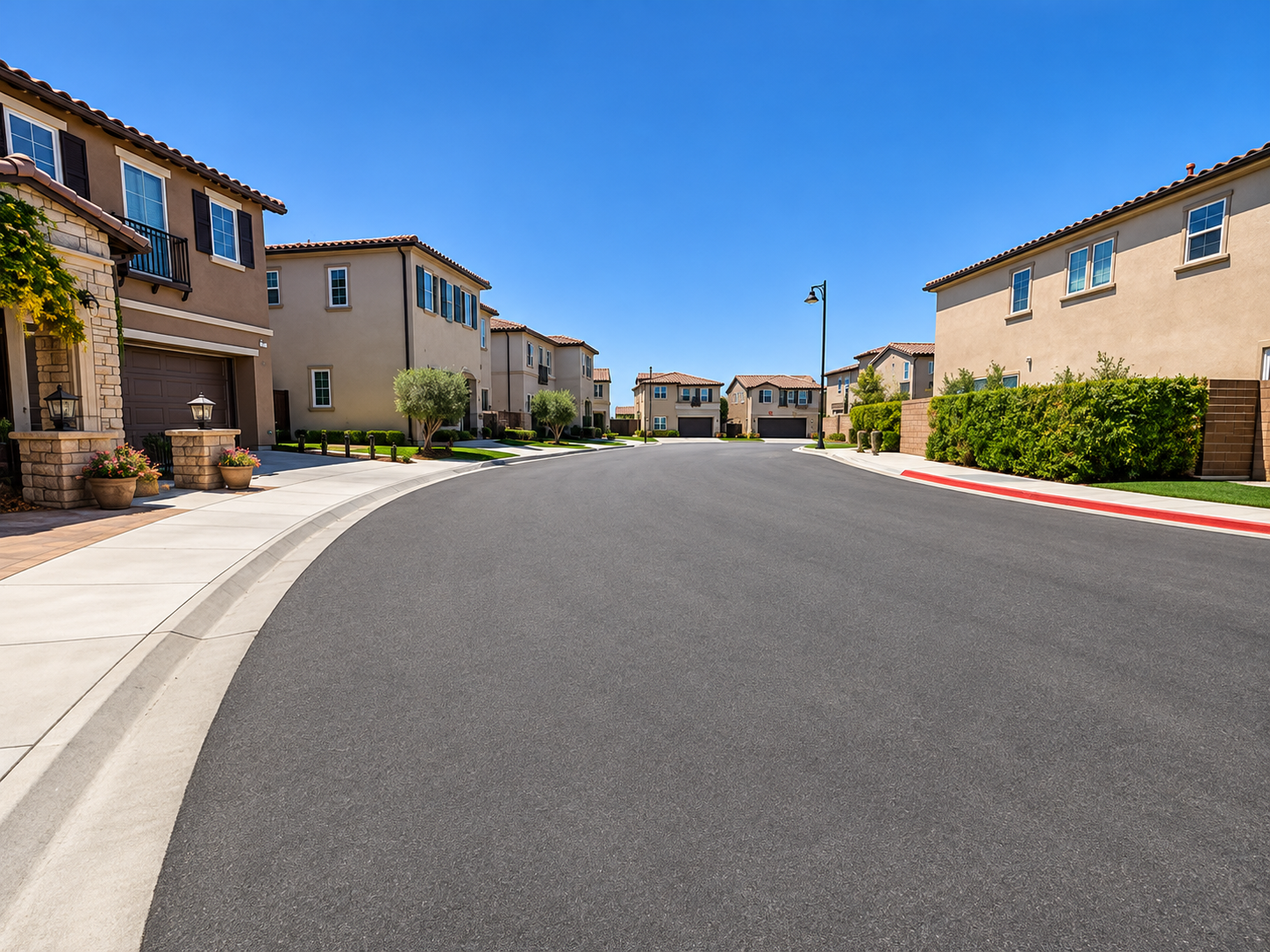
For a broader exploration of the development that preceded Porter Ranch, visit our page:
From Northridge to Porter Ranch: The Next Chapter in Suburban Living
The story of Porter Ranch is closely connected to the residential transformation that occurred in neighboring Northridge.
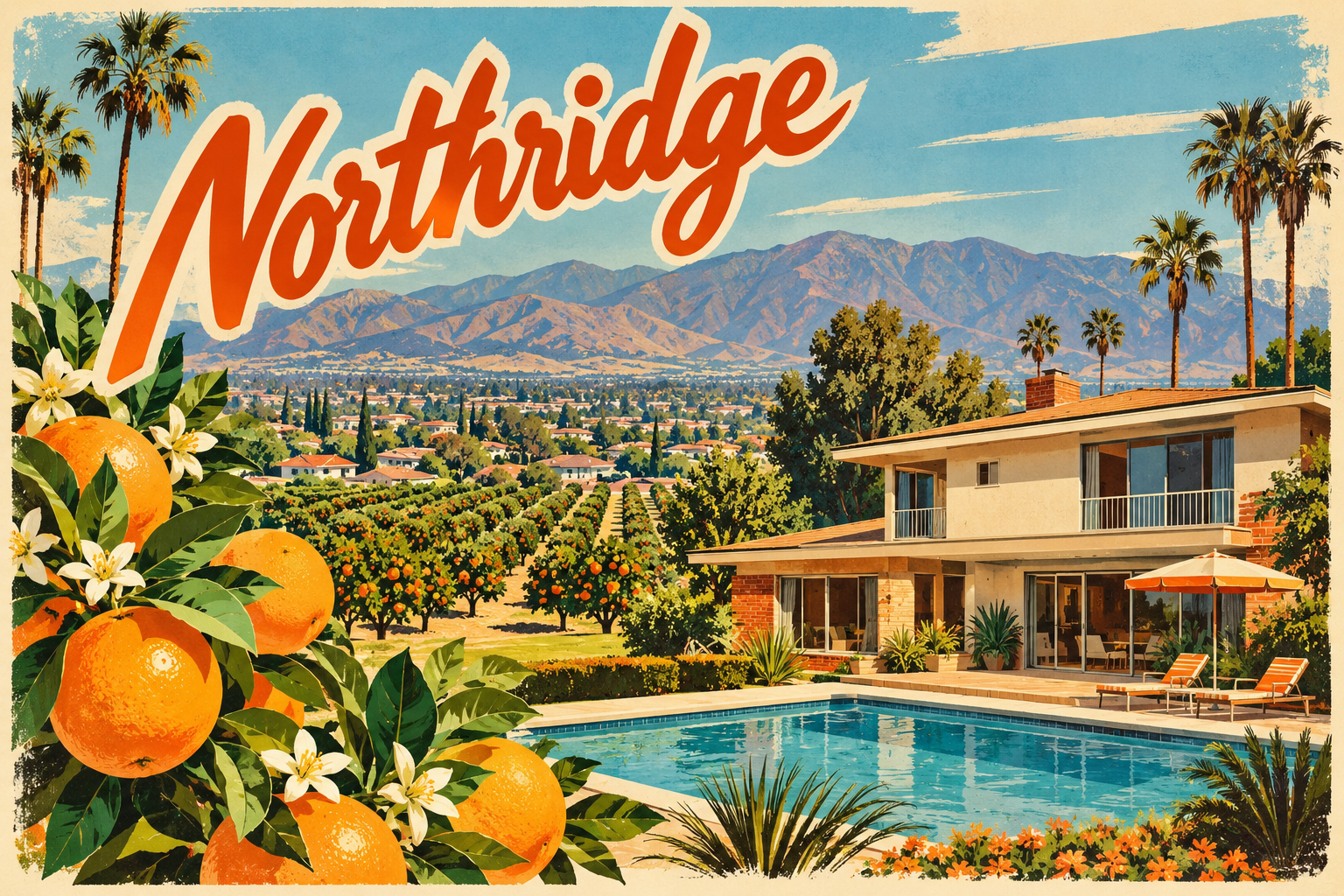
During the postwar decades, Northridge became an important part of the San Fernando Valley's expanding suburban landscape.
Residential neighborhoods developed around a changing vision of family life. Homes became larger, floor plans more elaborate, and private recreational amenities increasingly desirable.
Generous yards, swimming pools, additional bedrooms, family rooms, and expanded entertaining areas reflected the expectations of buyers seeking a more spacious residential environment.
As the community matured through the 1960s and 1970s, these characteristics helped establish a recognizable model of Southern California suburban living.
The home was becoming more than a place to live. It was becoming the center of a lifestyle.
But the residential development of the northwestern San Fernando Valley did not stop at Northridge.
As construction expanded northward toward the foothills and westward across the Valley, Porter Ranch offered another opportunity to build upon the suburban ideal.
The underlying priorities remained familiar: space, privacy, recreation, convenience, and an environment designed to support family life.
What began to change was how those priorities were incorporated into residential development.
Where earlier neighborhoods frequently emphasized the individual residence and its private amenities, newer communities increasingly incorporated recreational facilities, landscaped common areas, controlled access, and coordinated architectural design into the broader neighborhood experience.
Porter Ranch was not a departure from the suburban lifestyle established in Northridge.
It represented another stage in that evolution.
Before the Master-Planned Communities: Porter Ranch's Earliest Residential Neighborhoods
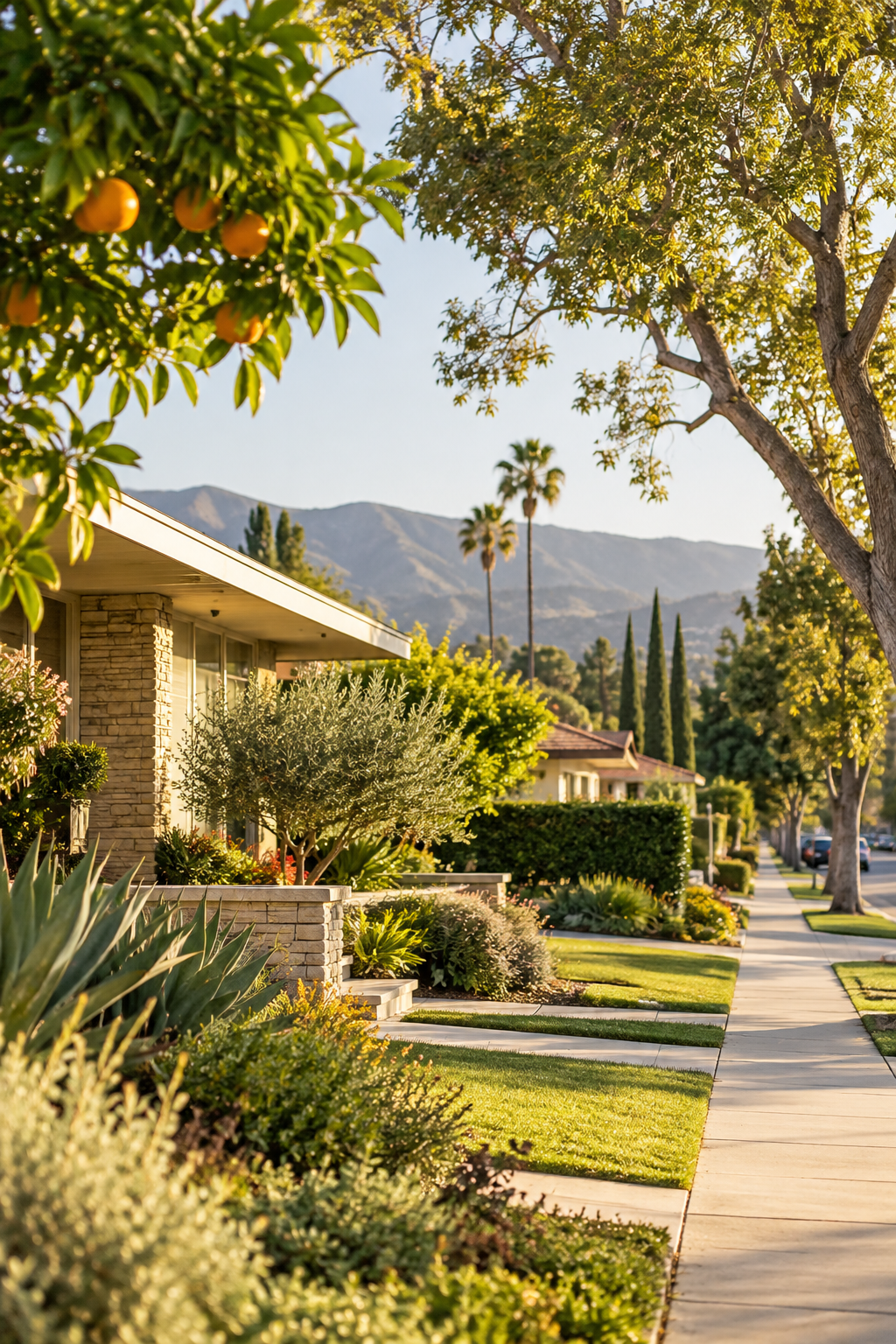
Although Porter Ranch is frequently associated with contemporary residences, gated developments, and hillside communities, its residential history begins with a considerably different generation of housing.
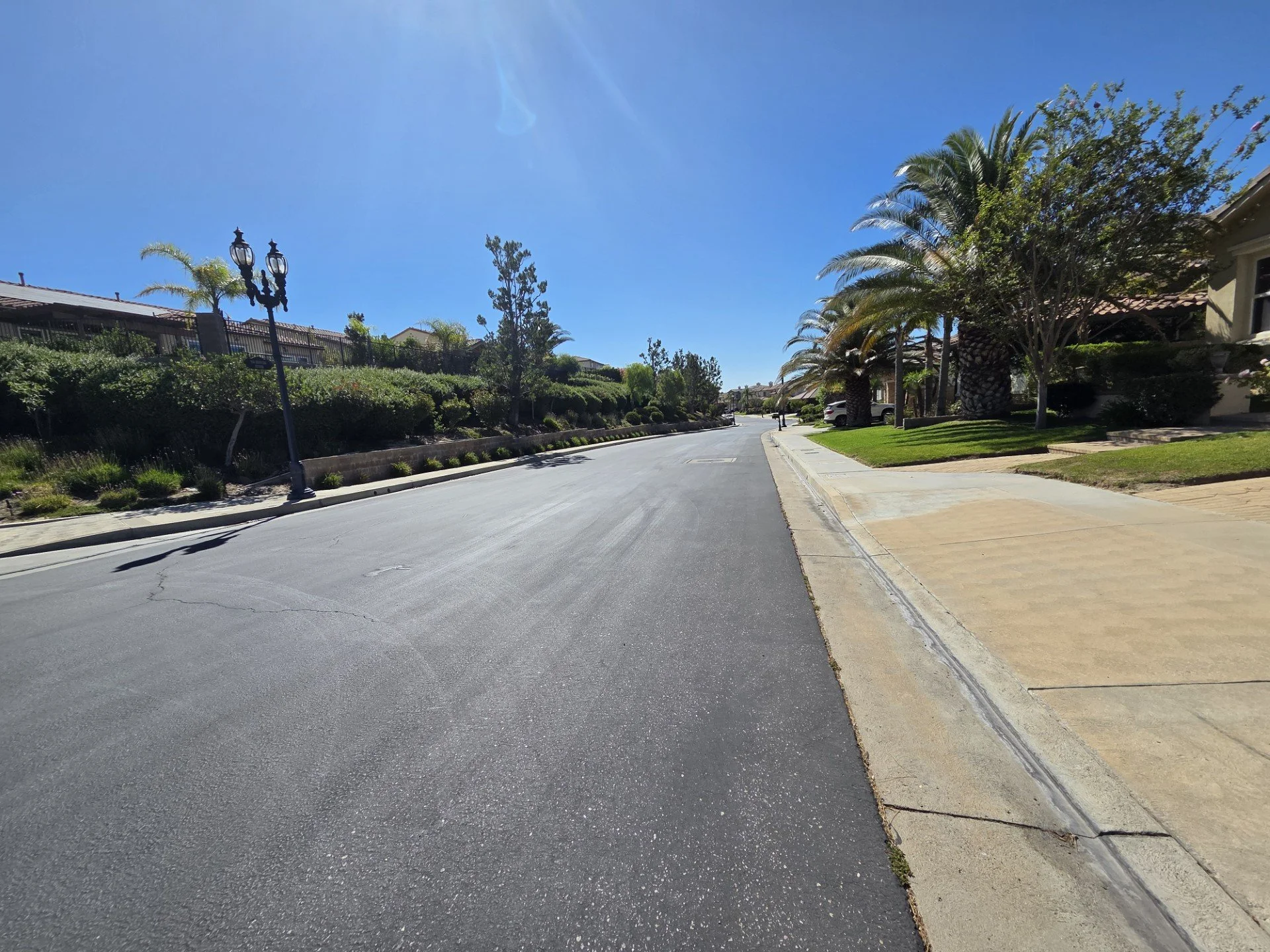
Some of the earliest neighborhoods associated with Porter Ranch developed during the early 1960s, alongside the postwar suburban expansion occurring throughout neighboring Northridge.
These earlier subdivisions reflected many of the architectural and residential planning characteristics familiar throughout the northwestern San Fernando Valley.
Single-family residences, traditional suburban street patterns, private yards, and architectural designs reflecting the preferences of the period helped establish the area's initial residential character.
Rather than the contemporary homes and coordinated residential communities that would later become associated with Porter Ranch, these neighborhoods reflected the conventional suburban development patterns of their time.
They remain an important part of the community's housing inventory.
These earlier residences also help explain why portions of Porter Ranch share so many physical and architectural similarities with neighboring Northridge.
When Porter Ranch Was Considered Part of Northridge
The historical relationship between Northridge and Porter Ranch extends beyond their architectural similarities.
Portions of the residential area now associated with Porter Ranch were historically identified with Northridge, and the distinction between the two communities evolved as residential development expanded.
The question of where Northridge ended and Porter Ranch began was not always straightforward.
By the early 1990s, proposed changes to community boundaries had become a matter of public debate.
In December 1993, the Los Angeles Times reported that a proposed boundary map would establish Porter Ranch from portions of northern Northridge and Chatsworth.
The proposal generated objections from representatives of Northridge, who questioned the proposed redefinition of their community.
The City Council committee postponed action while additional public input was considered.
The controversy illustrated how closely the communities' historical and geographic identities had become connected.
Even years later, differing interpretations of Porter Ranch's southern boundary remained part of the local conversation.
A 1999 Los Angeles Times account described how some longtime residents considered Devonshire Street the beginning of Porter Ranch, while other descriptions placed the southern boundary near the 118 Freeway.
This history helps explain why Northridge and Porter Ranch are sometimes discussed interchangeably, particularly when referring to their earlier residential neighborhoods.
The neighborhood names evolved, but the architectural and developmental connections between the communities remained.
Two Generations of Suburban Development Within One Community
The distinction between Porter Ranch's earlier neighborhoods and its subsequent residential expansion provides an opportunity to observe how suburban housing evolved over several decades.
Earlier residences frequently reflected the traditional Southern California suburban model: an individually owned home, a private yard, and recreational amenities developed and maintained by the homeowner.
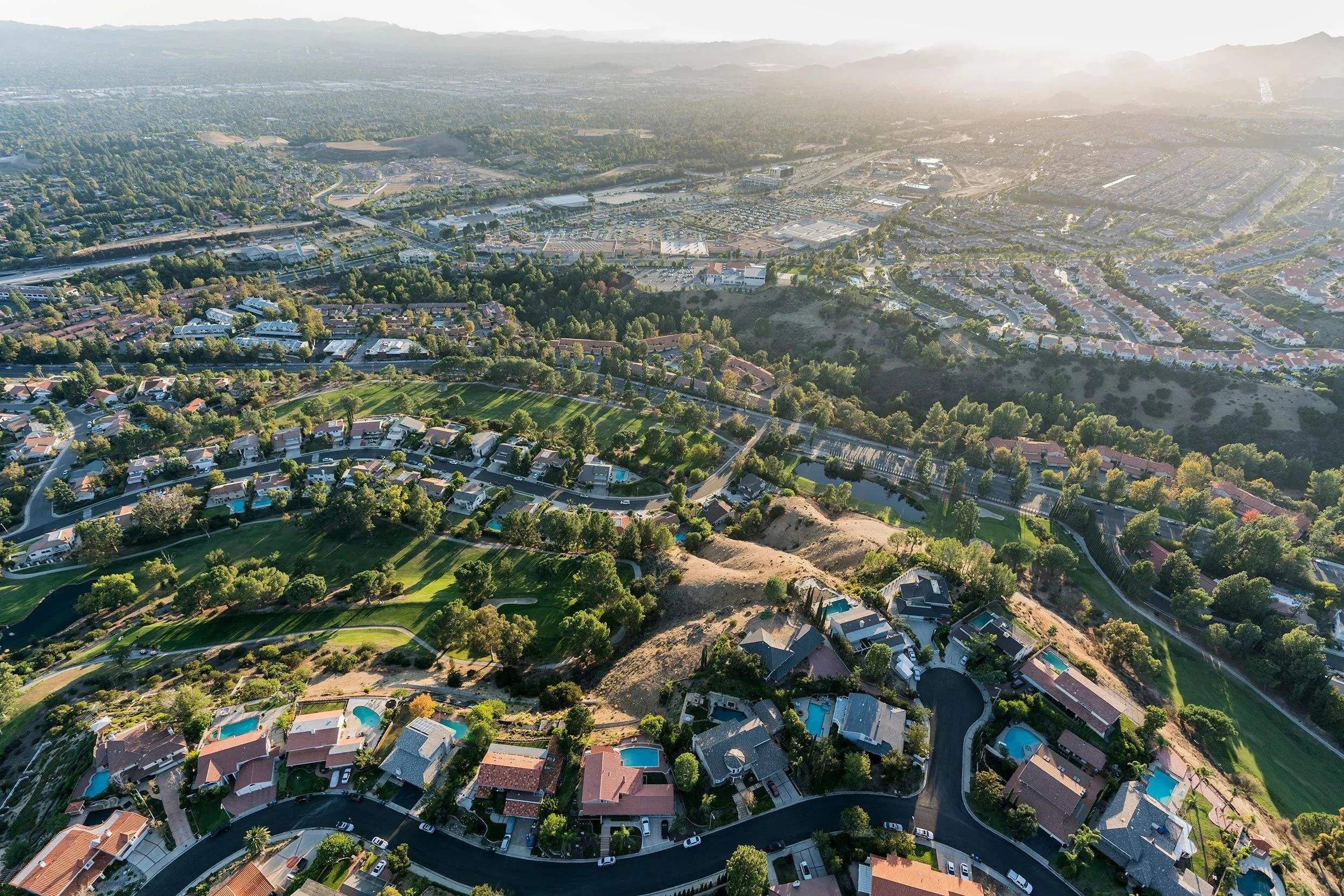
As Porter Ranch expanded, later developments increasingly incorporated coordinated neighborhood planning, shared recreational facilities, homeowners associations, controlled access, and contemporary architectural designs.
The underlying appeal of suburban living remained recognizable, but the residential alternatives available to buyers became more varied.
Today, Porter Ranch contains properties representing different periods of development, architectural preferences, and approaches to neighborhood design.
These distinctions are relevant not only to understanding the community's history but also to understanding its residential marketplace.
From Ranchland to Master-Planned Communities: The History of Porter Ranch
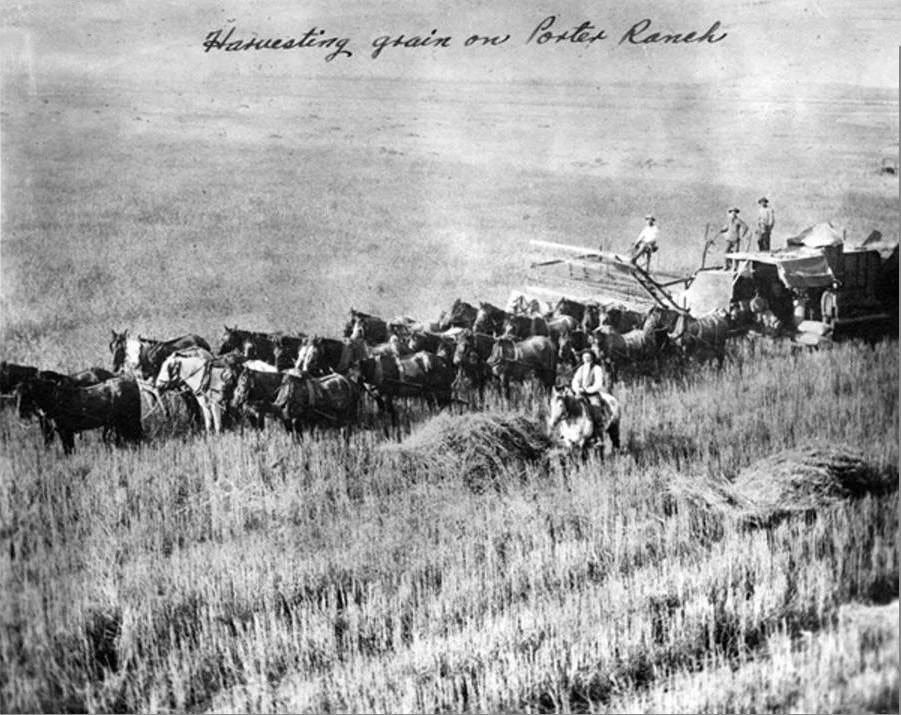
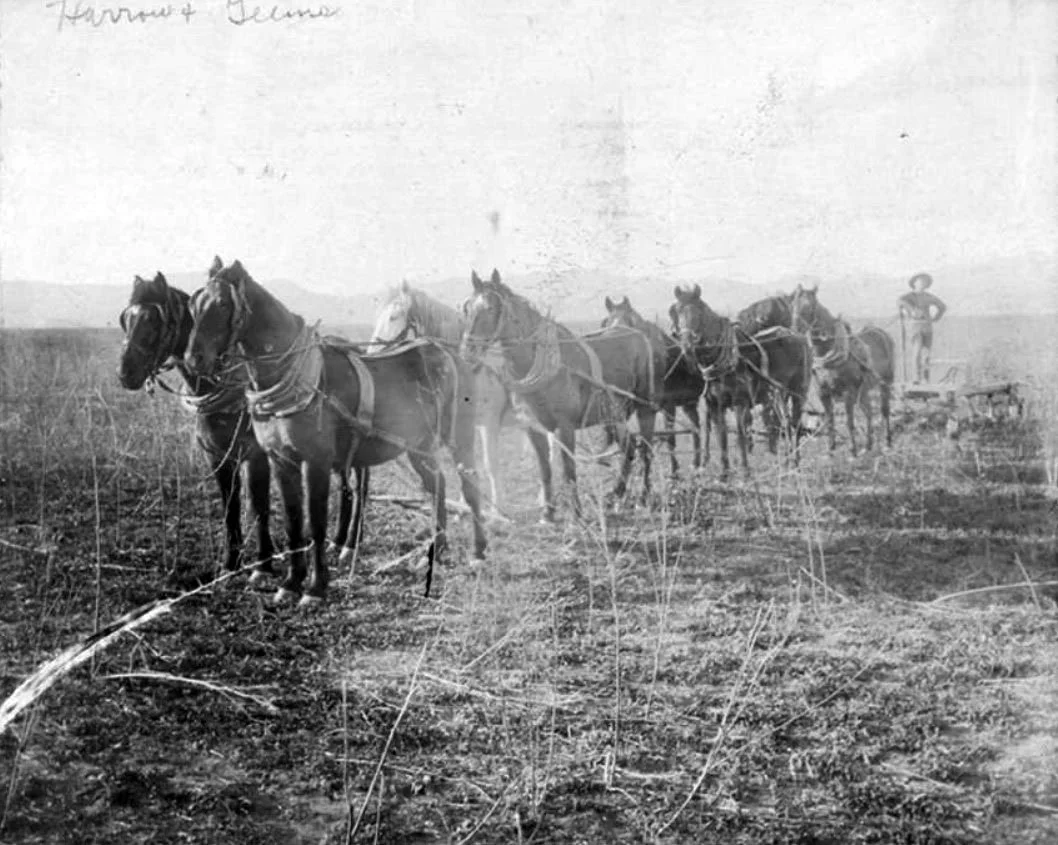
Long before Porter Ranch became associated with contemporary residential communities, the land was part of the agricultural landscape of the northern San Fernando Valley.
During the nineteenth century, the Porter family acquired extensive acreage in the region.
While surrounding portions of the Valley gradually transitioned toward residential development, much of the Porter family's property remained agricultural for generations.
That began to change in 1962, when the heirs of Benjamin Porter sold approximately 4,150 acres to the Macco Corporation.
The acquisition represented one of the remaining opportunities for large-scale residential development within the San Fernando Valley.
Rather than developing exclusively through individual subdivisions, the original vision for Porter Ranch incorporated residential neighborhoods, recreational facilities, parks, and substantial open space.
The master plan envisioned thousands of single-family residences arranged around recreational amenities and community open spaces.
Development began during the 1960s and continued through subsequent decades, introducing successive generations of residential construction.
The original planning included substantial parkland, reflecting an effort to incorporate recreation and open space into the development of the community rather than treating them exclusively as amenities belonging to individual properties.
As Porter Ranch expanded, new subdivisions incorporated changing architectural styles, larger residences, hillside locations, and increasingly coordinated approaches to neighborhood planning.
Later developments further emphasized gated access, shared amenities, and contemporary residential design.
This extended development history is one of the characteristics that distinguishes Porter Ranch from many other San Fernando Valley neighborhoods.
Rather than reflecting a single generation of construction, the community contains residential properties shaped by several decades of evolving consumer preferences and development practices.
The history of Porter Ranch is not simply a story of expanding residential construction. It is a story of changing expectations about how suburban communities should function.
Those distinctions remain important when evaluating Porter Ranch real estate today.
The Rise of Planned Communities:
From Private Lot to Planned Community
Northridge answered the postwar family with larger lots, bigger floor plans, and room for a pool and a yard. That model had a built in limit. Every amenity belonged to one owner, and so did every cost. The pool needed service, the landscaping needed a gardener, and the equipment eventually needed replacing. Each household paid for the lifestyle on its own.
Porter Ranch arrived at a different moment, with a different advantage. When home building began here in the 1960s, the hillside above Northridge was still largely open ranch land held in large blocks. Land assembled at that scale can be planned as a whole rather than built out parcel by parcel. In Southern California at the time, the most closely watched example of planning at that scale was taking shape on the Irvine Ranch in Orange County.
In 1960 the Irvine Company commissioned architect William Pereira to plan the entire ranch. Instead of an endless tract grid, his plan grouped residents into villages. Each village had defined edges and entrances, its own school, park, and neighborhood shopping, and wide arterial roads connected them all. The first villages opened in 1965, and the concept drew national attention. Developers took a clear lesson from it: with enough open land, the roads, shopping, services, and recreation could be designed together, and the product being sold was the whole environment rather than just the house.
The financing and legal structure arrived at almost the same time. In 1963 the FHA began insuring mortgages in communities governed by homeowners associations. The following year the Urban Land Institute published its Homes Association Handbook, which became the working guide for shared ownership of common property. A planned development with an association became a practical way to deliver amenities a single lot could not support.
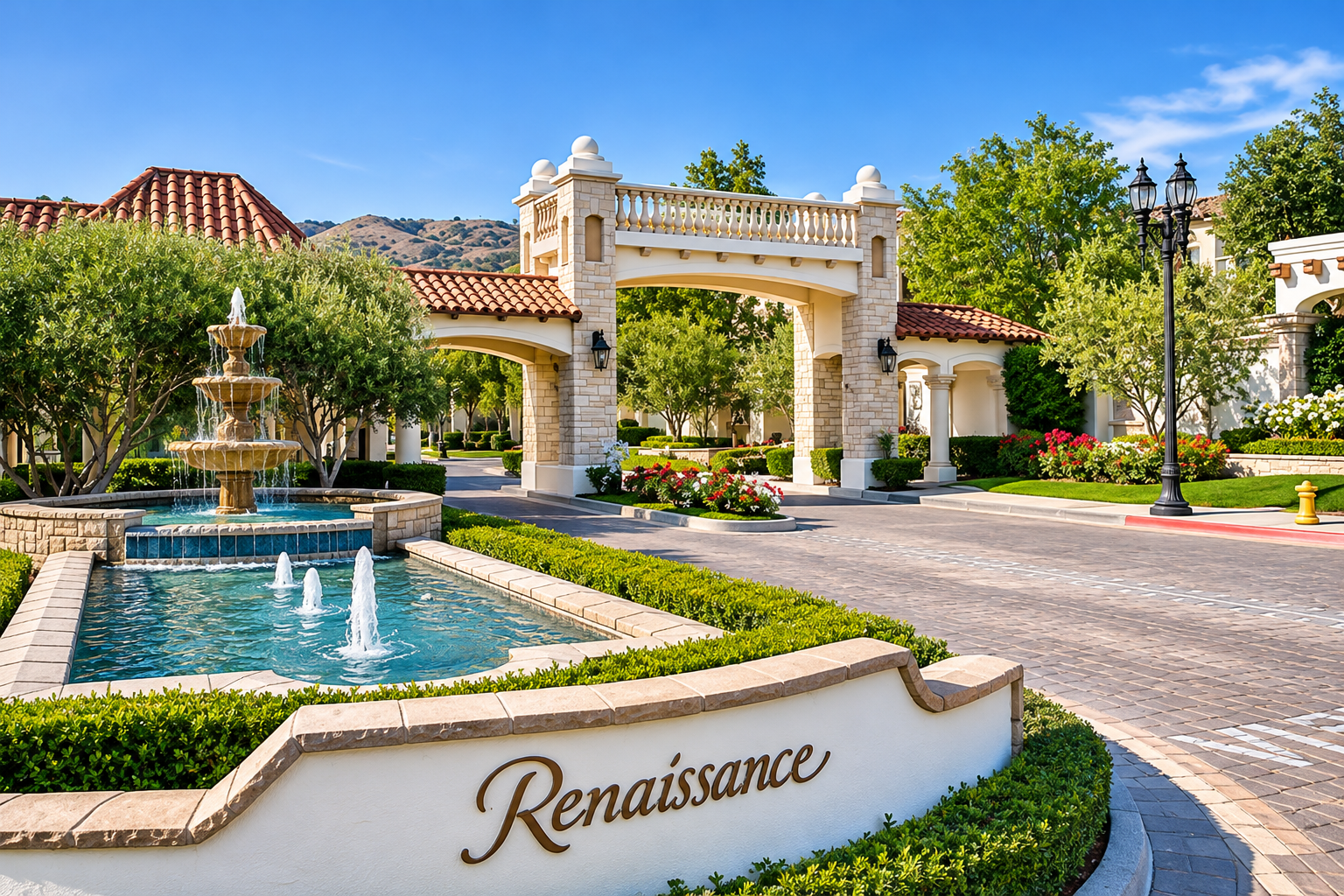
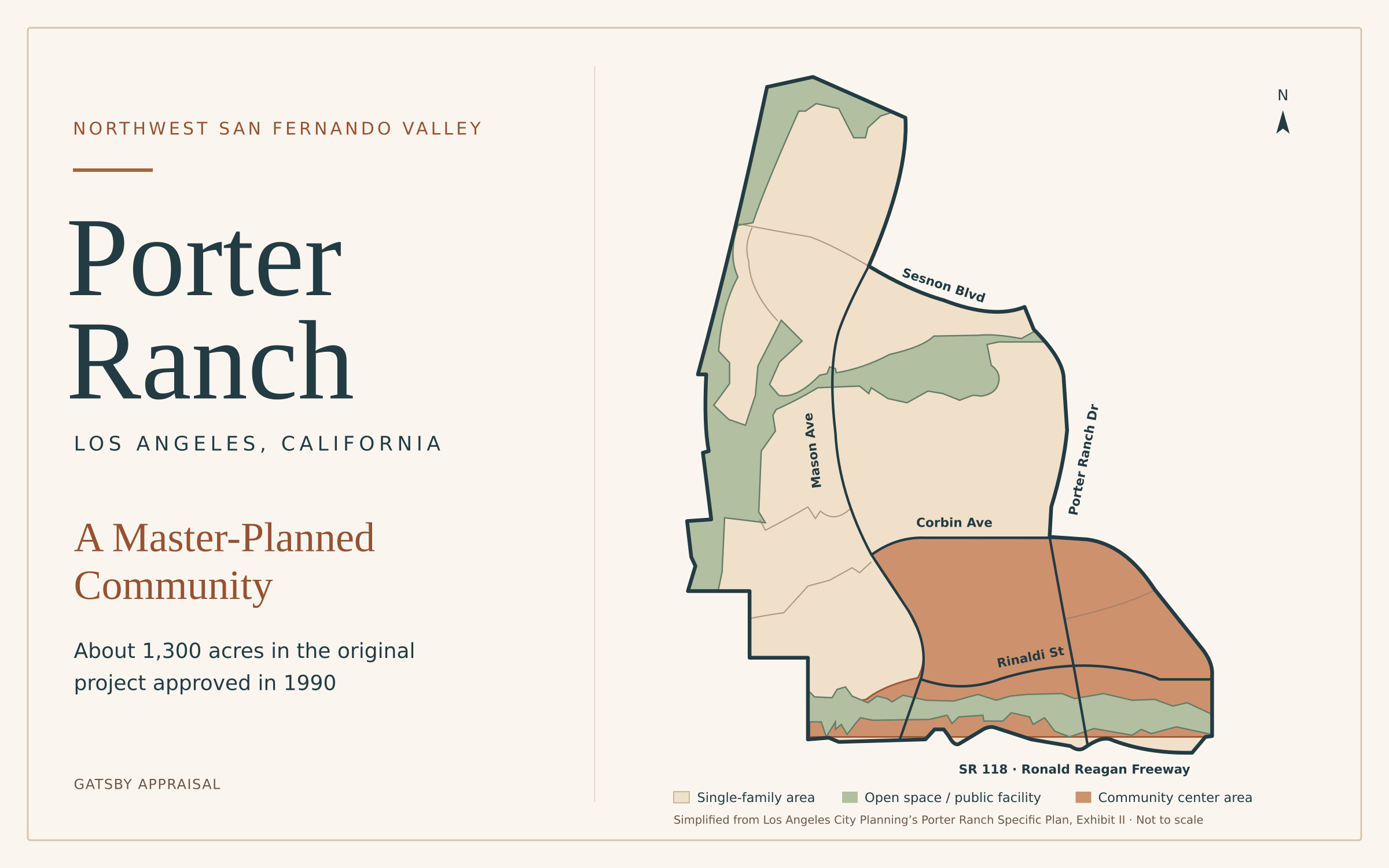
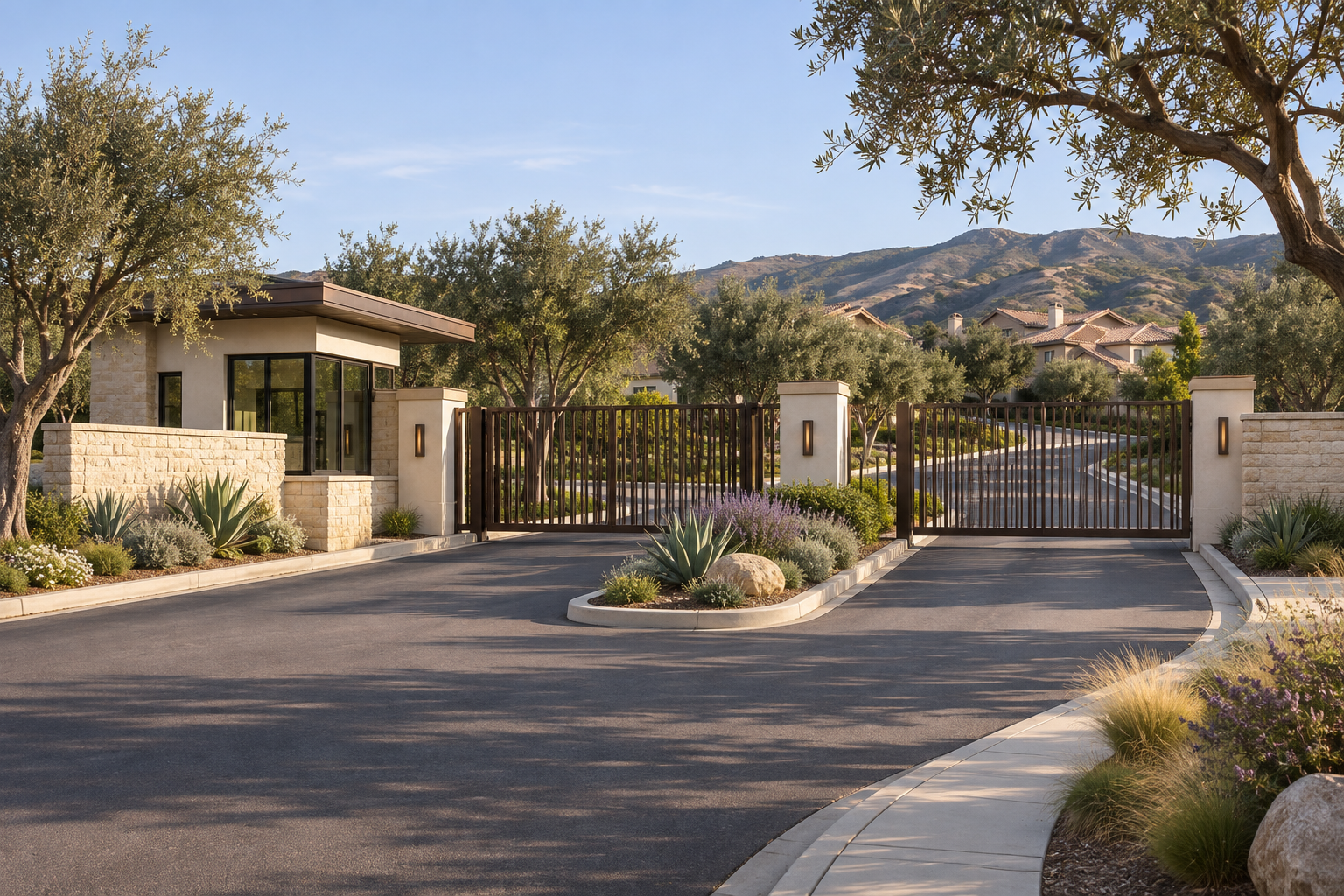
Porter Ranch followed that path in two waves. The first neighborhoods of the 1960s and 1970s set its hillside residential character. The second came with the Porter Ranch Land Use/Transportation Specific Plan, adopted by the City of Los Angeles in 1990. It laid out about 3,400 additional homes alongside a planned commercial center on the remaining open land. That later phase is the closest to the Irvine model: gated enclaves, common areas maintained by associations, a community shopping center, and finally The Vineyards as the community’s central gathering place.
For buyers, the proposition changed. Instead of owning a pool, they could belong to a community that had one, along with landscaped open space, recreation facilities, and controlled entry. An association handled the maintenance, and every household shared the cost. Resort style living became available without resort style upkeep, and nearly all of it was new construction.
That convenience comes with its own terms. Association dues, reserves, special assessments, and architectural standards are part of what the buyer acquires.
Why Ownership Structure Matters in Valuation
From an appraisal standpoint, how these communities are legally organized directly affects how properties compete in the marketplace. While PUDs became a primary vehicle for managing shared amenities, not every gated neighborhood in Porter Ranch is legally classified as a PUD, and the presence of an HOA does not automatically define a property's underlying ownership structure.
When valuing a home in Porter Ranch, we look closely at those distinctions. Monthly HOA dues, Mello-Roos assessments, common-area maintenance responsibilities, and amenity access all influence buyer demand, carrying costs, and which nearby sales serve as true comparables.
When the Community Becomes Part of the Purchase
Planned communities changed what a buyer is actually buying. A traditional subdivision sells a house on a lot. A planned community sells the house plus a set of shared amenities, maintenance arrangements, architectural standards, and association obligations. For many Porter Ranch buyers, that broader package matters as much as the floor plan.
That doesn’t make a planned community better than a traditional subdivision, or the other way around. For an appraiser, the useful question is narrower: how does the market respond to the specific amenities, obligations, and characteristics attached to a particular property? The answer has to come from sales evidence, not from assumptions about which kind of development buyers ought to prefer.
Why “Porter Ranch PUD” Is Not a Comparable Category
It’s tempting to treat Porter Ranch’s planned developments as one pool to pull comparables from. That oversimplifies the comp selection process, and Porter Ranch shows why.
The community is still being built. Enclaves from the 1990s sit a short drive from tracts finished in the last few years, and each reflects the expectations of its own era: what amenities were offered, how the floor plans were designed, what finishes were standard, and how buyers then wanted to live. The associations differ too. Dues, reserves, amenity packages, gate arrangements, and maintenance responsibilities vary from one development to the next, and buyers weigh those differences.
So two homes with the same square footage, the same bedroom count, and a Porter Ranch address are not automatically similar. A sale in one PUD can be a poor indicator for a home in another, even when the physical descriptions look nearly identical on paper.
Same Model, Different House
New construction to the north and west over the past decade added another layer. Many of these homes were customized by the buyer at the builder stage. Structural options, room conversions, upgraded finish packages, and builder upgrades can separate two homes that share the same model name and the same gross living area.
That’s how two sales of the same plan, with the same GLA, can close at very different prices with no difference in view, lot, or location to explain it. The difference lies in what was selected and paid for before the drywall went up. A credible comparison needs to identify those selections, which usually means going past the listing data to the builder’s option records, the original contract, and an inspection of the interior.
Where Automated Valuations Fall Short
This is why automated valuation models have a hard time in Porter Ranch. An AVM works from the data it can see: GLA, bedroom and bathroom counts, lot size, year built, and proximity. It can’t see which association a home belongs to or what that association provides and costs. It can’t tell a base model from one carrying a significant upgrade package. And it can’t tell that a 1990s enclave and a recently completed tract serve different buyers, even when they sit half a mile apart.
The result is a number that looks precise but rests on a false assumption: that similar size and location make similar properties. In a community still developing, with this much variation from tract to tract and from house to house within a tract, comparable selection takes judgment, research, and a close look at what each sale actually included.
If your lender, your attorney, or an online estimate has given you a number, ask what it was compared against. In a community this varied, that question matters.
Northridge or Porter Ranch? Understanding Two Distinct Residential Markets
Northridge and Porter Ranch are closely connected geographically and historically.
Their proximity, overlapping development patterns, and relationship to the broader northwestern San Fernando Valley sometimes lead to the communities being discussed almost interchangeably.
Yet their residential identities are not identical.
Northridge contains a substantial inventory of established residential neighborhoods, including mid-century construction, ranch-style residences, custom homes, larger suburban properties, and residences that have undergone extensive renovation or modernization.
Porter Ranch also contains earlier residential development, but its continued expansion introduced additional generations of planned communities, contemporary architecture, gated neighborhoods, and hillside construction.
These differences are particularly relevant when analyzing the competitive residential market.
A substantially renovated Northridge residence with an expansive private lot, mature landscaping, and individual recreational improvements may appeal to a different combination of buyer preferences than a newer Porter Ranch residence within a gated development offering shared amenities.
Other buyers may consider both properties reasonable alternatives.
Neither conclusion should be assumed.
Area Boundaries Do Not Necessarily Define Market Boundaries
One of the fundamental considerations in residential appraisal is identifying the market in which a property competes.
Municipal boundaries, ZIP codes, neighborhood names, and subdivision designations may help describe a property's location, but they do not independently establish its competitive market.
Properties located in neighboring communities may compete directly when buyers consider them reasonable alternatives.
Conversely, two residences within the same ZIP code may have substantially different competitive characteristics.
In Porter Ranch, development periods, architectural design, site characteristics, floor plans, community amenities, condition, and location can all influence comparable sale selection.
The earlier subdivisions associated with both Northridge and Porter Ranch provide a particularly relevant example.
Although individual properties may carry different neighborhood designations today, their original development periods, architectural characteristics, and residential settings may be closely related.
Conversely, an earlier Porter Ranch home and a recently constructed residence within a contemporary gated development may compete within different market segments despite sharing the same general community identity.
At Gatsby Appraisal, proximity is important. Comparability is essential.
Our valuation analysis considers the property characteristics and market evidence that support meaningful comparisons rather than relying exclusively on geographic distance or generalized neighborhood averages.
Considering a Residential Appraisal in Porter Ranch?
Gatsby Appraisal welcomes inquiries from homeowners, attorneys, real estate professionals, and private clients seeking independent residential valuation services.
Contact us to discuss your property, the purpose of the appraisal, and the information needed to begin.
Gatsby Appraisal — Clarity is the product.
Independent Appraisal Expertise in Porter Ranch
Whether the assignment involves a contemporary residence within a planned community, an established single-family property, or a home with unusual site or development characteristics, Gatsby Appraisal approaches each valuation according to its intended use and relevant market evidence.
Our experience throughout the San Fernando Valley provides an understanding of the residential development patterns, architectural changes, and market characteristics that distinguish Porter Ranch from surrounding communities.
As an independent residential appraisal practice established in 2003, Gatsby Appraisal combines professional valuation experience with longstanding familiarity with the communities of the northwestern San Fernando Valley. The appraiser grew up in Granada Hills and lived in the Northridge/Porter Ranch area for over 7 years.
That understanding extends beyond identifying a property's location or architectural style.
It includes recognizing how neighborhoods developed, how residential preferences evolved, and how differences between properties may influence their competitive market positions.
For clients making important real estate decisions, these distinctions can be essential.
Understanding the property is important.
Understanding its market is what makes the valuation meaningful.