
North Hollywood: A Distinctive Residential Market
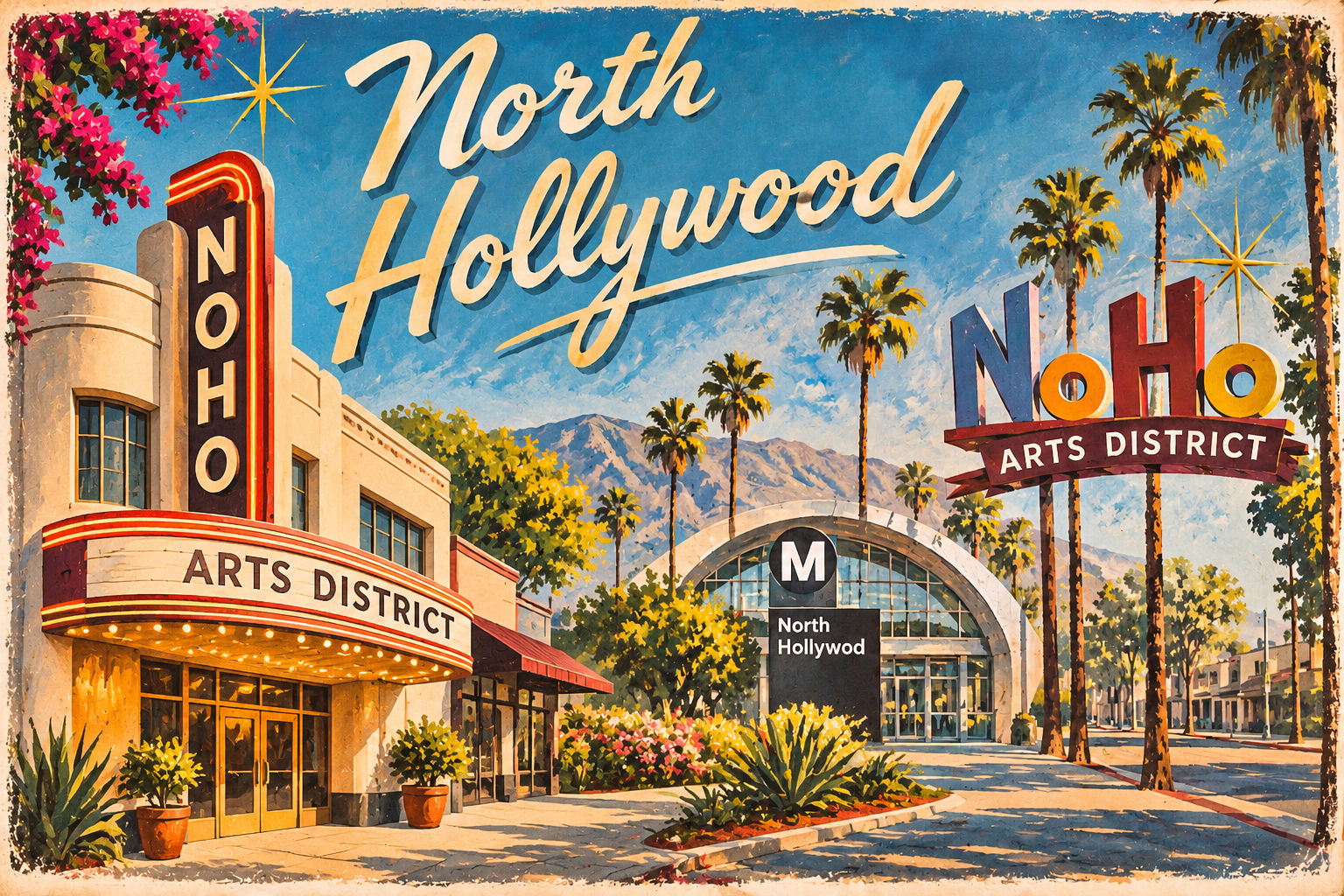
North Hollywood has developed an identity distinctly its own. From its agricultural beginnings as the community of Toluca in the late nineteenth century, the area has evolved into one of the San Fernando Valley's most dynamic residential and cultural centers. Affectionately known as NoHo, the community combines established residential neighborhoods with the creative energy of its Arts District, a thriving entertainment scene, and a major Metro transit connection offering convenient access to Hollywood and Downtown Los Angeles.
Its location is equally compelling. Situated near Burbank, Studio City, Toluca Lake, Valley Village, and Sherman Oaks, North Hollywood offers access to some of the Valley's most established residential and commercial destinations. The community's housing inventory has evolved alongside its appeal, with original single-family residences increasingly complemented by substantial renovations, expanded floor plans, accessory dwelling units, and contemporary construction. The result is a residential market shaped by its history, energized by its surroundings, and characterized by considerable diversity in housing styles, improvements, and property utility.
North Hollywood: Crossroads of Transportation, Culture & Commerce
North Hollywood occupies a distinctive position within the southeastern San Fernando Valley, combining established residential neighborhoods with exceptional access to transportation, education, employment, and entertainment.
Situated near Burbank, Studio City, Toluca Lake, Valley Village, and Sherman Oaks, the community benefits from its proximity to several of Los Angeles' recognized residential and commercial destinations. The nearby Ventura Boulevard corridor provides additional access to restaurants, shopping, professional services, and entertainment.
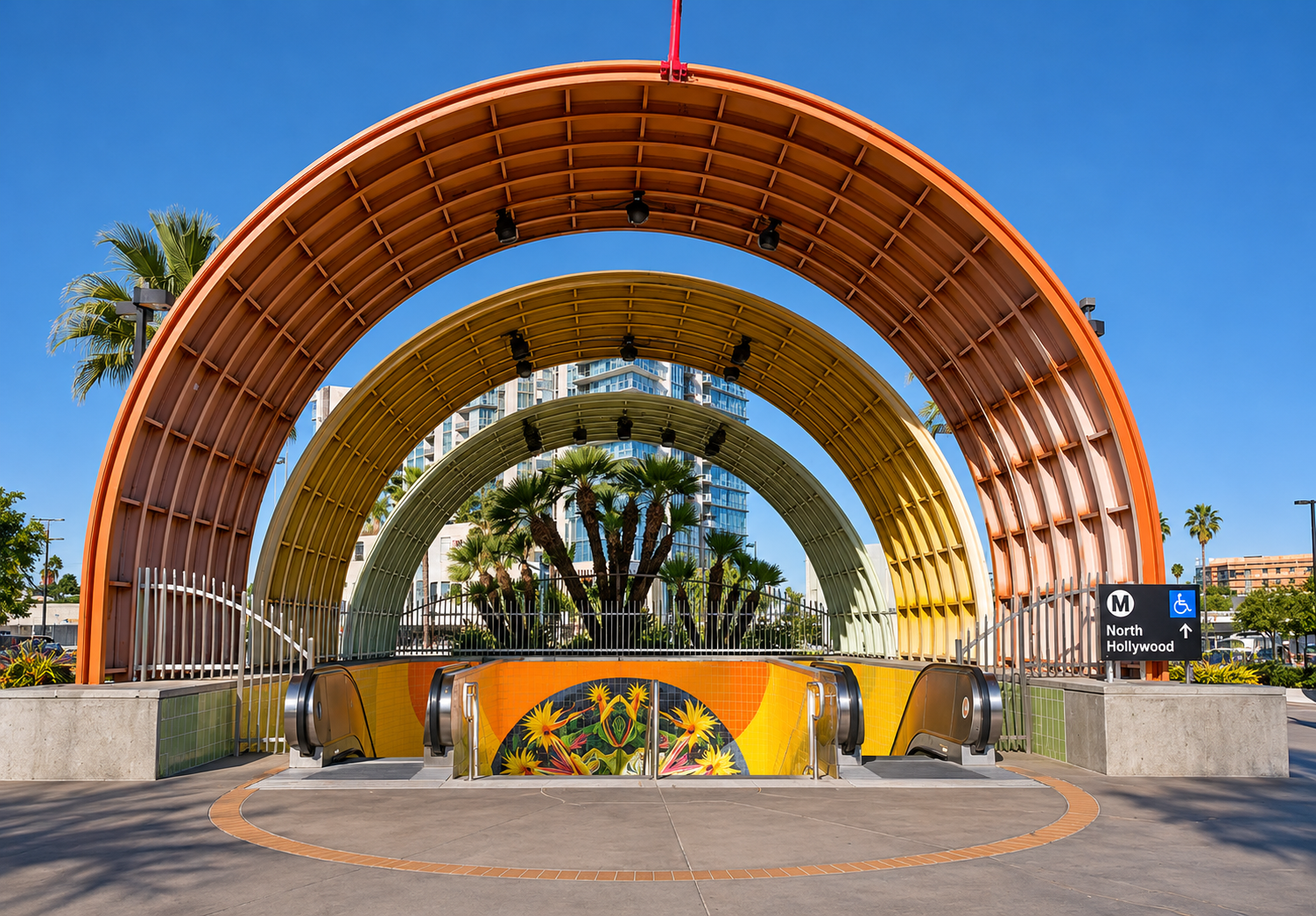
North Hollywood's transportation network is a defining characteristic. The Hollywood (170), Ventura (101 and 134), and Golden State (5) freeways provide regional connectivity throughout the San Fernando Valley and greater Los Angeles. The North Hollywood Metro station serves as a major transit hub, connecting the B Line subway, with direct service to Hollywood and Downtown Los Angeles, and the G Line busway, which extends westward through the San Fernando Valley.
Educational opportunities include nearby Los Angeles Valley College, a public community college in neighboring Valley Glen that is also accessible through the Metro G Line.
The community also benefits from its proximity to Universal Studios Hollywood, major entertainment and production facilities, and employment centers throughout Burbank, Studio City, and Hollywood.
Together, these characteristics provide North Hollywood with a combination of residential accessibility, transportation alternatives, educational resources, and cultural amenities that contribute to its distinctive position within the greater Los Angeles housing market.
North Hollywood: Residential Reinvestment and ADU Development
North Hollywood's residential evolution extends well beyond the NoHo Arts District. Throughout its established single-family neighborhoods, original homes have been renovated, expanded, and adapted to accommodate changing residential preferences. Many properties occupy relatively level parcels exceeding 5,000 square feet, providing opportunities for building additions, garage conversions, and accessory dwelling units (ADUs), subject to individual site characteristics and applicable development regulations.
Accessory dwelling unit construction has become a particularly significant component of North Hollywood's residential reinvestment.
According to a 2026 analysis of Los Angeles building permit records, North Hollywood ranked first among the city's neighborhoods for estimated ADU permits issued in 2025, with approximately 281 permits.
North Hollywood ADU Permitting Activity
2023: 241 permits
2024: 268 permits
2025: 281 permits
Three-year increase: Approximately 17%
These figures represent estimated neighborhood activity derived from ZIP-code permit data rather than exact neighborhood-boundary counts.
A separate analysis identified approximately 1,660 ADU permits associated with North Hollywood ZIP codes 91605 and 91606 between January 2020 and October 2026, demonstrating the broader scale of permitting activity over a longer period. The two datasets use different geographic definitions and should not be interpreted as directly comparable.
The prevalence of ADU permitting reflects a continuing transformation of North Hollywood's established residential inventory. Original single-family residences increasingly coexist with expanded homes, detached accessory units, converted garages, and properties offering additional residential or potential rental utility.
From an appraisal perspective, these improvements introduce important distinctions in property configuration, permitted use, functional utility, and market appeal. An expanded residence with an ADU may compete within a different segment of the housing market than a neighboring property retaining its original improvements.
At Gatsby Appraisal, the contributory value of renovations, additions, and ADUs is evaluated through relevant market evidence, with consideration given to legally permitted improvements, property characteristics, and demonstrated buyer and seller behavior. Construction expenditures alone do not establish an equivalent contribution to market value.
The NoHo Arts District: Creative Spaces and Residential Development
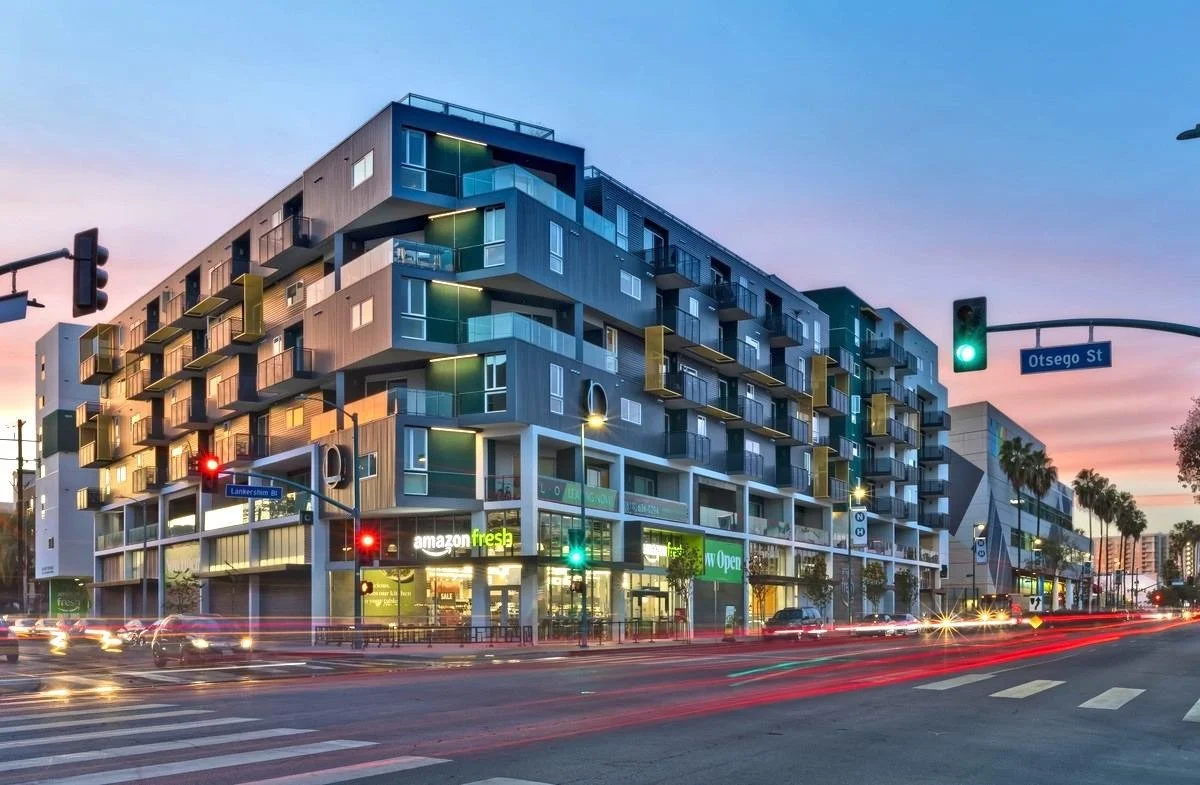
North Hollywood's Arts District has introduced a distinctive dimension to the community's residential market. Centered around Lankershim and Magnolia Boulevards, the district combines theaters, performing arts venues, restaurants, creative businesses, and an evolving collection of residential and mixed-use developments.
One particularly notable characteristic is the emergence of live/work lofts, which combine residential accommodations with flexible spaces designed for professional or creative activities. Several developments illustrate how North Hollywood has adapted both existing buildings and new construction to accommodate these uses.
Notable NoHo Live/Work Developments
NoHo Lofts — 5355 Cartwright Avenue: Originally a 1950s industrial building associated with the Adolph's Meat Tenderizer Company, the property was converted into 68 live/work lofts in 2006. The adaptive reuse project introduced residential and creative uses into a former industrial structure, with two-level configurations and ceiling heights reaching approximately 25 feet.
Lofts at NoHo Commons — 11179 Weddington Street: Developed in 2006, this 292-unit residential complex includes studio apartments, conventional residences, and designated live/work lofts. Located near the Metro station, the development features loft-style interiors with ceiling heights of approximately 11–14 feet. The property sold for $92.5 million in 2024.
Art Set NoHo — 11525 Chandler Boulevard: This contemporary residential development incorporates studio apartments and flexible loft configurations, including units with mezzanines, ceiling heights reaching approximately 19 feet, and creative workspace amenities. Its design reflects the district's continuing emphasis on adaptable residential environments.
NoHo 10 — 5617 Klump Avenue: Completed in 2025, this three-story live/work development offers contemporary open-plan units with high ceilings, natural light, and flexible configurations marketed toward creative professionals and small-business operators.
These properties illustrate the range of residential development within North Hollywood, from adaptive reuse of former industrial buildings to contemporary construction designed around changing residential and professional needs.
From a valuation perspective, live/work properties warrant particular consideration of legally permitted uses, unit configuration, ownership interests, functional utility, and the market participants to whom they appeal. Their characteristics may differ substantially from conventional single-family residences or standard apartment units, requiring appropriate market segmentation and comparable-property analysis.
The NoHo Arts District and Surrounding Residential Development
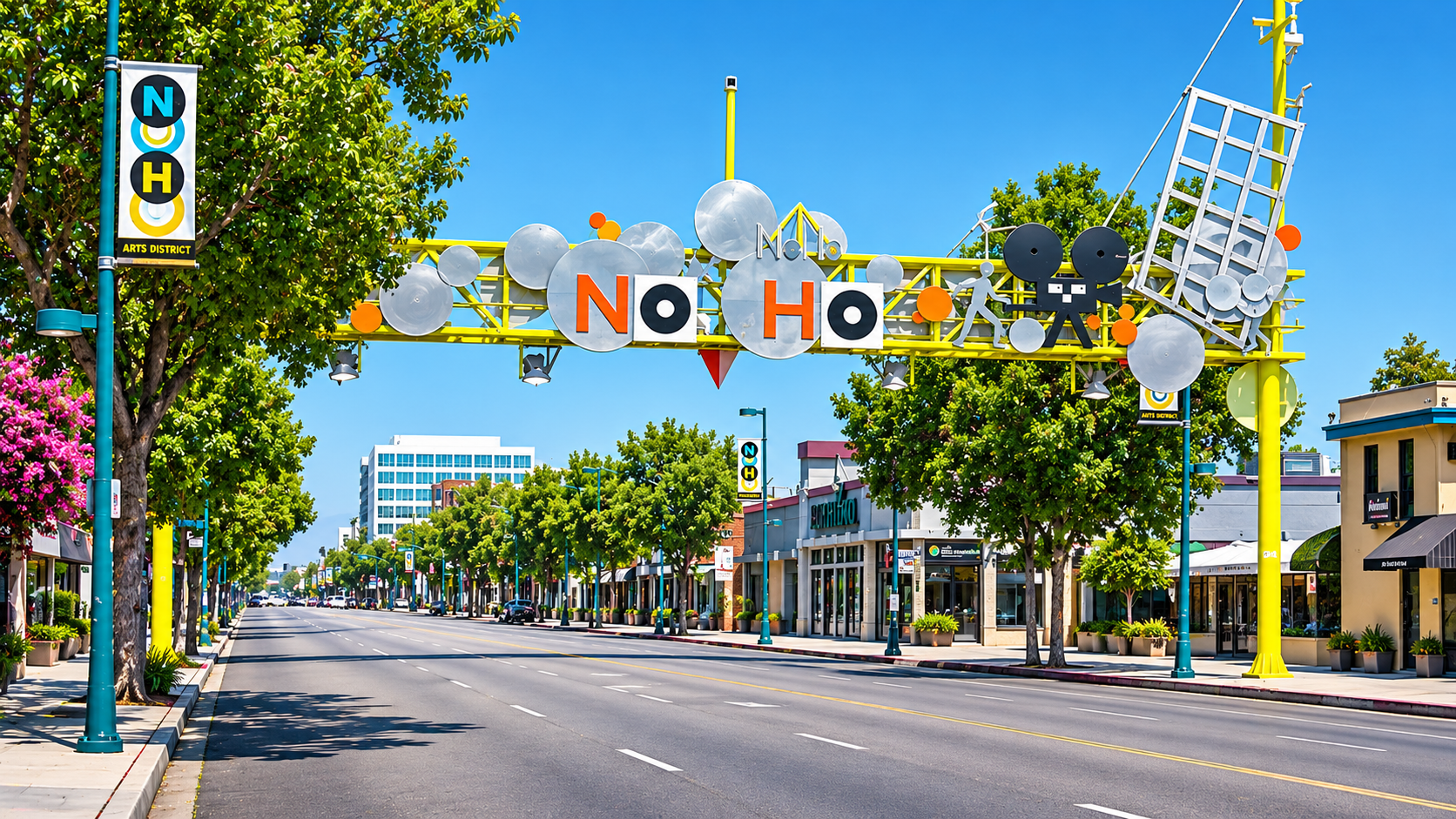
The NoHo Arts District represents another distinctive component of North Hollywood's identity.
Centered around portions of Lankershim Boulevard and Magnolia Boulevard, the district contains theaters, performing arts venues, restaurants, entertainment establishments, and residential development.
Its cultural and commercial environment contrasts with the quieter single-family neighborhoods found elsewhere throughout North Hollywood.
The community also contains multifamily housing, mixed-use development, and commercial corridors that create differing neighborhood influences.
Proximity to commercial activity, transportation infrastructure, employment centers, and higher-density residential development may affect property appeal and marketability differently depending on the property type and immediate surroundings.
Consequently, North Hollywood should not be analyzed as a single, uniform residential market.